
Table of Contents
ToggleJapanese indoor plants offer more than aesthetic appeal, they bring a philosophy of balance, simplicity, and intentional design into modern homes. Rooted in centuries of cultivating harmony between nature and living spaces, these plants thrive indoors when given proper care. From the disciplined art of bonsai to the vertical elegance of bamboo, Japanese varieties adapt well to container life and lower light conditions common in U.S. homes. They’re not just décor: they’re living elements that encourage mindfulness and improve air quality. Whether you’re aiming for a minimalist corner accent or a full Zen-inspired interior, understanding these plants’ origins and needs will help you succeed.
Key Takeaways
- Japanese indoor plants are ideal for modern homes because they thrive in low to medium indirect light, have compact root systems suitable for containers, and require consistent moisture without demanding wet-dry watering cycles.
- Bonsai and clumping bamboo varieties are popular Japanese plants for indoor cultivation, with bonsai needing 4–6 hours of bright indirect light and well-draining akadama-based soil, while bamboo prefers 10- to 15-gallon containers with a 2:1 potting soil-to-compost mix.
- Japanese indoor plants succeed with medium to bright indirect light, evenly moist soil, 50–60% humidity, and balanced fertilization at half strength during the growing season—conditions that align with typical home environments and human comfort levels.
- Japanese plant design emphasizes ma (negative space) and kanso (simplicity), so displaying a single well-placed specimen on a focal-point shelf with a neutral backdrop creates more visual impact than scattering multiple plants throughout a room.
- Maintain Japanese plants by monitoring undersides of leaves weekly for pests, removing dead foliage promptly, and rotating seasonal accents to reflect nature’s cycles—practices that combine practical care with the mindfulness these plants are meant to inspire.
Why Japanese Plants Are Perfect for Indoor Spaces
Japanese horticulture developed over centuries in a climate with distinct seasons and limited space, which led cultivators to prioritize compact growth, sculptural form, and adaptability. These same traits make Japanese plants exceptionally well-suited for indoor environments.
Many species naturally tolerate partial shade and high humidity, conditions that align with typical interior settings away from south-facing windows. Plants like Japanese aralia (Fatsia japonica) and peace lily varieties adapted for Japanese gardens handle low to medium indirect light without leggy growth or leaf drop. Their compact root systems work well in containers ranging from 6 to 14 inches in diameter, making them practical for apartments and smaller rooms.
Japanese plant design emphasizes negative space and asymmetry, principles borrowed from wabi-sabi aesthetics. This means a single well-placed specimen can anchor a room without clutter. Unlike tropical plants that grow aggressively, many Japanese varieties maintain modest height and spread, 12 to 36 inches for most indoor cultivars, reducing the need for constant pruning.
From a maintenance perspective, these plants often prefer consistent moisture rather than wet-dry cycles, which simplifies watering schedules. Humidity requirements (typically 40–60% relative humidity) match what’s comfortable for humans, so you won’t need elaborate misting routines or dedicated humidifiers in most climates. If you’re already managing common indoor house plants, Japanese varieties will feel familiar in care but offer a distinct visual identity.
Best Japanese Plants for Indoor Growing
Bonsai Trees: The Art of Miniature Nature
Bonsai isn’t a plant species, it’s a cultivation technique that trains trees and shrubs into miniaturized, sculptural forms. Common indoor bonsai include Japanese maple (Acer palmatum), juniper (Juniperus procumbens), and ficus varieties. These aren’t genetically dwarfed: they’re standard species kept small through root pruning, wiring, and canopy trimming.
Indoor bonsai require 4–6 hours of bright, indirect light daily. A south- or west-facing window works best, though grow lights can supplement in darker rooms. Use well-draining bonsai soil, typically a blend of akadama (fired clay), pumice, and lava rock in a 2:1:1 ratio. Standard potting soil retains too much moisture and will rot roots in the shallow containers bonsai are planted in, often just 2 to 4 inches deep.
Watering needs vary by species, but the soil surface should dry slightly between waterings. Check daily: small pots dry out fast. Fertilize every two weeks during the growing season (spring through early fall) with a balanced liquid fertilizer diluted to half strength. Techniques for training branches require patience, and some varieties like Japanese maple benefit from spending part of the year outdoors to fulfill dormancy requirements, as outlined in guides on growing maples indoors.
Safety note: Wear gloves when wiring and pruning. Some species have sap that can irritate skin.
Bamboo Varieties for Indoor Cultivation
Not all bamboo runs rampant. Lucky bamboo (Dracaena sanderiana), even though its name, isn’t true bamboo but a member of the asparagus family. It tolerates low light and grows happily in water or soil, making it foolproof for beginners. Keep water levels covering the roots, and change it weekly to prevent algae buildup.
For true bamboo, select clumping varieties like Bambusa multiplex (hedge bamboo) rather than running types that spread aggressively. Clumping bamboo stays contained in pots, typically reaching 3 to 6 feet indoors depending on container size. Plant in a 10- to 15-gallon container with drainage holes, using a mix of potting soil and compost in a 2:1 ratio.
Bamboo prefers bright, indirect light and consistent moisture, water when the top inch of soil feels dry. Fertilize monthly during the growing season with a high-nitrogen fertilizer (such as a 20-10-10 formulation) to support lush foliage. Mist leaves weekly if indoor humidity drops below 40%, common in winter when heating systems run.
Bamboo is non-toxic to pets, unlike many tropical big leaf plants, making it a safer choice for homes with curious cats or dogs.
Care Requirements for Japanese Indoor Plants
Light: Most Japanese indoor plants fall into the medium to bright indirect light category. Place them within 3 to 5 feet of an unobstructed east- or west-facing window. Avoid direct afternoon sun, which can scorch leaves, especially on delicate varieties like maidenhair fern (Adiantum pedatum), a common Japanese garden accent. For low-light situations, consider supplementing with full-spectrum LED grow lights positioned 12 to 18 inches above foliage, similar to setups for house plants that don’t need sunlight.
Watering: Japanese plants generally prefer evenly moist soil rather than extremes. Check moisture 2 inches below the surface with your finger or a moisture meter. For most species, water when this zone feels barely damp. Use room-temperature water, cold tap water can shock roots. Ensure pots have drainage holes: standing water invites root rot, particularly in slower-draining akadama or clay-heavy mixes.
Humidity: Target 50–60% relative humidity. In dry climates or during winter heating, set pots on pebble trays filled with water (pot bottom should sit above water line, not in it) or group plants together to create a microclimate. Avoid misting foliage directly on species prone to fungal issues, like certain bonsai.
Soil: Use well-draining mixes. For bonsai, the akadama blend mentioned earlier. For bamboo and foliage plants, combine two parts quality potting mix, one part perlite, one part orchid bark. This structure prevents compaction while retaining enough moisture.
Fertilization: Feed during active growth (March through September) with a balanced liquid fertilizer (10-10-10 or 20-20-20) at half the label rate every two to four weeks. Japanese plants evolved in nutrient-moderate soils and can suffer tip burn from over-fertilization. Skip feeding in fall and winter when growth slows.
Pruning and Maintenance: Remove dead or yellowing leaves promptly to prevent pest harboring. Bonsai require seasonal pruning to maintain shape, remove up to one-third of new growth in late spring. Bamboo may develop brown tips if humidity is low: trim these back to healthy tissue with sharp, sterilized pruning shears.
Pests: Watch for spider mites, scale, and mealybugs, especially on bonsai. Inspect undersides of leaves weekly. Treat infestations early with insecticidal soap or neem oil, following label instructions. Wear gloves and a mask when applying, and treat in a well-ventilated area or outdoors.
Safety: Always wear safety goggles when pruning overhead branches or wiring bonsai. Some fertilizers and pest treatments are toxic if ingested, store out of reach of children and pets.
Styling Your Home with Japanese Plant Design Principles
Japanese design revolves around ma (negative space), kanso (simplicity), and shizen (naturalness). These principles translate directly into how you display plants indoors.
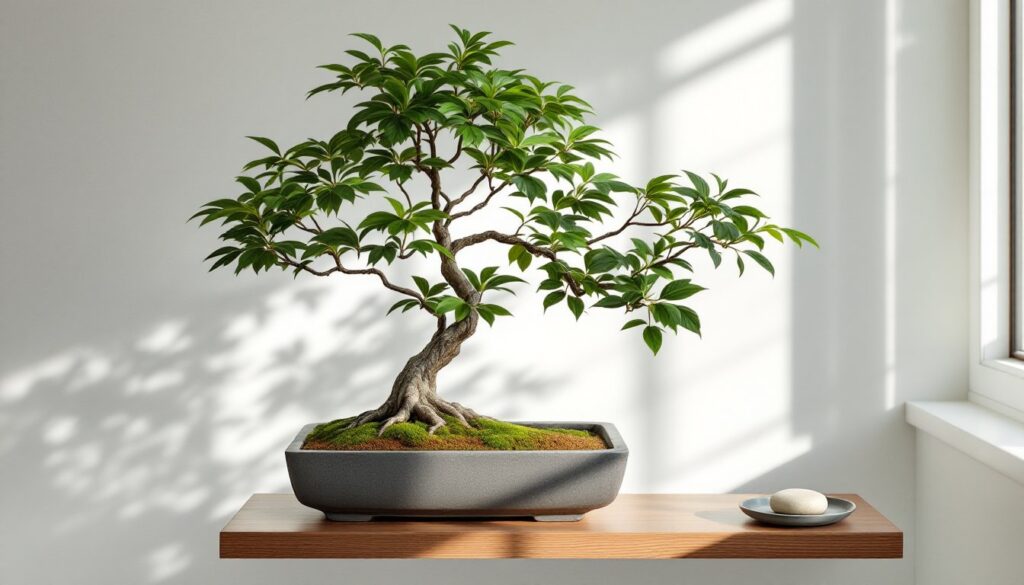
Placement: Choose a single focal point rather than scattering plants throughout a room. A bonsai on a tokonoma-style shelf (a recessed alcove or simple floating shelf 36 to 48 inches off the floor) draws the eye and creates a meditation point. Pair it with a neutral backdrop, white or light wood walls, to emphasize form. According to design resources like Better Homes & Gardens, restraint in plant placement often has more impact than abundance.
Container Selection: Opt for unglazed ceramic, stoneware, or natural wood containers in earth tones, grays, browns, muted greens. Avoid bright colors or busy patterns that compete with the plant. Bonsai pots are traditionally shallow and rectangular or oval, with width roughly two-thirds the tree’s height. For bamboo, a cylindrical or square pot in charcoal or terracotta maintains the clean-lined aesthetic.
Understatement: Japanese design avoids symmetry and perfection. A bonsai with a slight lean or asymmetrical branch structure feels more organic than a mirror-image specimen. This philosophy also applies to plant groupings, arrange in odd numbers (one, three, five) and vary heights. A tall bamboo beside a low bonsai and a mid-height fern creates visual rhythm without clutter.
Accent Elements: Incorporate natural materials, a piece of driftwood, a simple stone, or a handmade ceramic dish for displaying moss. Keep accessories minimal. A single element beside your plant is enough. For example, a small dish of water near a bonsai nods to traditional Japanese garden water features without literal imitation.
Lighting as Design: Use directional LED spotlights or picture lights to highlight a featured plant in the evening, casting dramatic shadows that change as branches sway. This technique, borrowed from Japanese garden night lighting, transforms a static display into something dynamic.
Seasonal Rotation: Rotate plants or change accents with the seasons. Swap a flowering bonsai for an evergreen juniper in winter, or add a small seasonal element, a pinecone in fall, a sprig of bamboo in spring. This nods to the Japanese practice of acknowledging nature’s cycles indoors. Insights from The Spruce emphasize seasonal refreshes as an easy way to keep interiors feeling current without major overhauls.
Avoid the temptation to fill every surface. Empty space is active, not wasted, it gives plants room to breathe and your eye space to rest.
Conclusion
Japanese indoor plants deliver both aesthetic discipline and practical adaptability. They thrive in typical home conditions, require less fuss than their delicate reputation suggests, and bring a design philosophy that values quality over quantity. Start with a single well-chosen specimen, master its care rhythm, and expand from there. The patience these plants teach, checking soil daily, trimming with intention, mirrors the mindfulness they’re meant to inspire.