
Table of Contents
ToggleIndoor palms bring a slice of the tropics into any living space, transforming ordinary rooms into lush retreats. But they’re not quite the low-maintenance beauties many assume. These plants have specific needs that, when met, reward you with years of healthy growth and architectural presence. Get the basics wrong, especially watering and light, and you’ll watch those elegant fronds turn brown faster than you can say “overwatered.”
This guide walks through exactly what indoor palms require to thrive, from light levels to soil composition. Whether you’re dealing with a parlor palm in a dim hallway or an areca palm in a sunlit corner, you’ll know what to adjust and when.
Key Takeaways
- Successful indoor palm care depends on mastering light, watering, temperature, and humidity rather than treating them as low-maintenance plants.
- Bright, indirect light is essential for most indoor palms—position them near east- or north-facing windows and rotate them every few weeks to prevent uneven growth.
- Water consistently so the top 1–2 inches of soil dry between waterings, using filtered or treated water to avoid chlorine and fluoride damage to fronds.
- Maintain 50–60% humidity through grouping plants, using a humidifier, or pebble trays, as low humidity causes crispy leaf tips and invites spider mites.
- Brown tips usually indicate low humidity or water quality issues, while yellowing lower fronds signal overwatering or poor drainage—adjust care accordingly before problems escalate.
Understanding Your Indoor Palm’s Basic Needs
Indoor palms aren’t one-size-fits-all. Species vary widely in their tolerance for low light, dry air, and temperature swings. Most common varieties, parlor palms (Chamaedorea elegans), areca palms (Dypsis lutescens), and kentia palms (Howea forsteriana), originate from tropical or subtropical understories where they’re sheltered from direct sun and receive consistent moisture.
The key to success is mimicking those conditions without overdoing it. Palms grow slowly indoors compared to their outdoor counterparts, so they don’t need aggressive feeding or frequent repotting. They do, but, need consistent care. Inconsistent watering or sudden environmental changes stress the plant, leading to brown tips, yellowing fronds, or pest infestations.
Before you bring a palm home, confirm the species and its mature size. Some varieties, like majesty palms, can outgrow a room quickly. Others, like parlor palms, stay compact. Knowing what you’re working with prevents surprises and helps you plan placement, container size, and long-term care.
Most palms prefer bright, indirect light, steady warmth, and high humidity, but the degree varies. Check the plant tag or research your specific variety to fine-tune care.
Mastering Light Requirements for Healthy Palm Growth
Light is where most palm owners go wrong. Too little and growth stalls: too much and the fronds scorch. Most indoor palms thrive in bright, indirect light, think a spot near an east- or north-facing window where sunlight filters through sheer curtains.
Direct sun, especially from south or west exposures, can bleach fronds and cause brown, crispy patches. If your only option is a bright window, pull the palm back 3–5 feet or use a sheer curtain to diffuse the intensity. Parlor palms and kentia palms tolerate lower light better than arecas or bamboo palms, making them solid choices for dimmer rooms or offices.
If natural light is limited, supplemental lighting helps. For grow lights for house applications, use full-spectrum LED fixtures positioned 12–24 inches above the canopy. Run them for 10–12 hours a day to compensate for weak or indirect window light.
Rotate your palm a quarter turn every few weeks to ensure even growth. Palms naturally lean toward light sources, and regular rotation prevents lopsided development. Watch the fronds: pale, stretched growth signals insufficient light: scorched tips or fading color indicate too much.
Watering Your Indoor Palm the Right Way
Watering palms is a balancing act. They like consistently moist soil but will rot if left waterlogged. The top 1–2 inches of soil should dry out between waterings, stick your finger in to check before you water.
Use room-temperature water and water thoroughly until it drains from the bottom. Empty the saucer after 15–20 minutes to prevent the roots from sitting in standing water. Palms are sensitive to chlorine and fluoride, which cause brown leaf tips. If your tap water is heavily treated, let it sit out overnight before watering, or use filtered water.
During the growing season (spring and summer), palms may need water weekly. In fall and winter, growth slows and watering frequency drops, sometimes to every 10–14 days. Adjust based on temperature, humidity, and pot size. Larger pots dry out more slowly than smaller ones.
Underwatering causes fronds to droop and turn brown from the tips inward. Overwatering leads to yellowing lower fronds, mushy stems, and root rot. If you’re unsure, err on the side of slightly dry. Palms recover better from brief dryness than from soggy roots. For more on balancing moisture with common indoor house varieties, many of the same principles apply.
Temperature and Humidity: Creating the Perfect Environment
Indoor palms prefer steady warmth and hate drafts. Ideal daytime temperatures range from 65–80°F, with nighttime temps no lower than 55°F. Keep palms away from heating vents, air conditioners, and exterior doors where temperature swings are common.
Humidity is just as critical. Most palms thrive at 50–60% relative humidity, which is higher than typical indoor levels, especially in winter when heating systems dry the air. Low humidity causes brown, crispy leaf tips and makes palms vulnerable to spider mites.
To boost humidity:
- Group plants together. Clustering palms and other houseplants creates a microclimate with higher moisture.
- Use a humidifier. A cool-mist unit set nearby raises ambient humidity effectively.
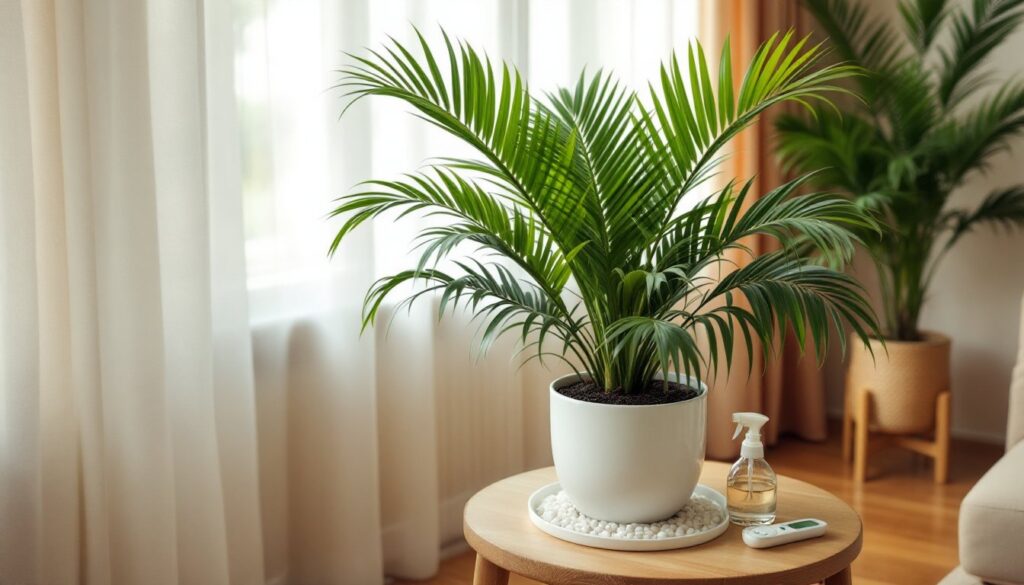
- Place pots on pebble trays. Fill a shallow tray with pebbles and water, then set the pot on top (not in the water). As the water evaporates, it humidifies the air around the plant.
- Mist sparingly. Misting provides a brief humidity bump but can encourage fungal issues if fronds stay wet. It’s not a substitute for consistent ambient humidity.
Monitor your indoor environment with a basic hygrometer. If humidity consistently drops below 40%, expect more maintenance and potential issues. For tropical big leaf species, including many palms, maintaining adequate humidity is non-negotiable for long-term health.
Soil, Fertilizing, and Repotting Essentials
Palms need well-draining potting mix to prevent root rot. A standard indoor potting soil amended with perlite or coarse sand (about 1 part amendment to 3 parts soil) works well. You can also use a commercial palm or cactus mix, which is formulated for faster drainage.
Avoid heavy, moisture-retentive soils. Palms grow in loose, aerated substrates in nature, and compacted soil suffocates roots. If water pools on the surface or drains slowly, the mix is too dense.
Fertilize during the growing season (April through September) with a balanced, water-soluble fertilizer formulated for palms or houseplants. Dilute to half the recommended strength and apply monthly. Palms are light feeders: over-fertilizing causes salt buildup, which burns roots and leads to brown tips.
Look for fertilizers that include micronutrients, especially magnesium and manganese. Deficiencies in these nutrients cause yellowing or necrotic spots on older fronds. If you notice widespread yellowing, a dose of Epsom salt (1 tablespoon per gallon of water, applied quarterly) can help correct magnesium deficiency.
Repot only when necessary, typically every 2–3 years or when roots circle the pot’s bottom. Palms tolerate being slightly root-bound. Choose a container only 2 inches larger in diameter than the current pot. Repot in spring before the growing season ramps up. Avoid disturbing the root ball more than necessary: palms don’t respond well to aggressive root pruning.
Always use pots with drainage holes. Decorative cache pots are fine as long as you can remove the inner pot to drain excess water.
Common Problems and How to Fix Them
Brown Tips: Usually caused by low humidity, fluoride/chlorine in tap water, or fertilizer salt buildup. Increase humidity, switch to filtered water, and flush the soil with room-temperature water every few months to leach out salts. Trim brown tips with clean scissors, cutting just into the green tissue to maintain a natural shape.
Yellowing Fronds: Lower fronds yellow naturally as the plant ages, this is normal. If multiple fronds yellow rapidly, check for overwatering, poor drainage, or root rot. Reduce watering frequency and ensure the pot drains freely. Yellow fronds accompanied by a foul odor indicate root rot: you may need to unpot, trim damaged roots, and repot in fresh soil.
Spider Mites: These tiny pests thrive in dry conditions and appear as fine webbing on fronds. Increase humidity and spray the plant with a strong stream of water to dislodge them. For persistent infestations, use insecticidal soap or neem oil, following label directions. According to care guides for indoor palms, consistent humidity and regular frond inspection prevent most mite problems.
Scale Insects: Look like small, brown bumps on stems and fronds. Scrape them off with a fingernail or soft brush, then wipe down affected areas with rubbing alcohol on a cotton swab. Repeat weekly until clear.
Stunted Growth: Often a sign of insufficient light, nutrient deficiency, or root-bound conditions. Reassess light levels, fertilize during the growing season, and check if the palm needs repotting.
Fungal Issues: Overwatering and poor air circulation invite fungal diseases. Space plants for airflow, avoid wetting fronds during watering, and water at the soil level. Remove affected fronds promptly. If you’re dealing with declining plants, home plant rescues often start with correcting watering habits and improving drainage.
Safety Note: Wear gloves when handling palms if you have sensitive skin. Some varieties can cause minor irritation. Always wash hands after working with soil or treating pests.
Conclusion
Indoor palms aren’t difficult, but they do demand consistency. Master the fundamentals, appropriate light, careful watering, stable temperature, and adequate humidity, and these plants will reward you with years of lush, architectural greenery. Pay attention to what your palm is telling you through its fronds, adjust as needed, and you’ll avoid most common pitfalls. For more inspiration on building a thriving indoor jungle, resources like Gardenista and The Spruce offer design ideas and plant pairings that complement palms beautifully.