
Table of Contents
ToggleIndoor foliage plants offer more than just aesthetic appeal, they’re working elements of a well-designed interior. From filtering airborne particulates to moderating humidity levels, the right greenery pulls double duty in any room. But success with foliage plants isn’t about luck or innate green-thumb talent. It’s about matching plant requirements to your home’s conditions and following straightforward care protocols. This guide covers selection, placement, routine maintenance, and troubleshooting for anyone ready to build a thriving indoor plant collection without guesswork or trial-and-error.
Key Takeaways
- Indoor foliage plants filter air pollutants and control humidity, reducing indoor VOCs by up to 25% while offsetting drying effects from heating and air conditioning.
- Beginner-friendly indoor foliage plants like pothos, snake plants, and ZZ plants tolerate inconsistent watering and low light, making them ideal for first-time plant owners.
- Proper drainage, quality potting mix, and appropriate container size are essential—overwatering is the leading cause of houseplant failure.
- Light is the single most important factor in plant health; match foliage plants to your home’s natural light conditions rather than forcing them into unsuitable spaces.
- Common problems like yellow leaves, brown tips, and pest infestations stem from overwatering, low humidity, or poor environmental conditions—each requires specific adjustments to care routines.
- Many popular foliage plants are toxic to pets and children, so research toxicity before purchasing and consider non-toxic alternatives if needed.
Why Indoor Foliage Plants Are Essential for Modern Homes
Indoor foliage plants deliver measurable benefits beyond decoration. Most varieties remove volatile organic compounds (VOCs) like formaldehyde and benzene from indoor air, substances commonly off-gassed by building materials, furniture finishes, and cleaning products. Studies show that just a few strategically placed plants can reduce indoor pollutants by up to 25% in enclosed spaces.
Humidity control is another practical advantage. Through transpiration, foliage plants release moisture into the air, helping offset the drying effects of central heating and air conditioning. This becomes particularly valuable in winter months when indoor relative humidity often drops below comfortable levels, affecting respiratory health and wood furnishings alike.
From a design perspective, foliage plants add vertical interest and textural contrast without permanent commitment. Unlike built-ins or paint colors, plants can be relocated, swapped seasonally, or removed entirely as needs change. They soften hard architectural lines, fill empty corners, and create natural focal points in rooms that lack architectural features. For renters or anyone hesitant about permanent modifications, plants offer high visual impact with zero lease violations.
Best Low-Maintenance Foliage Plants for Beginners
New plant owners should start with species that tolerate inconsistent watering and average indoor light conditions. Pothos (Epipremnum aureum) tops most beginner lists for good reason, it thrives in low to moderate light, tolerates dry soil between waterings, and propagates readily from stem cuttings. Its trailing vines work well in hanging baskets or trained up moss poles.
Snake plants (Sansevieria trifasciata) handle neglect better than most houseplants. They store water in thick, upright leaves and can survive four to six weeks without irrigation. Snake plants also tolerate low light, though growth slows considerably compared to brighter placements. They’re ideal for corners, bathrooms, or north-facing rooms where other plants struggle.
ZZ plants (Zamioculcas zamiifolia) feature glossy, compound leaves on thick stems that store water and nutrients. They’ll survive in fluorescent office lighting or dim entryways and require watering only when soil is completely dry, typically every two to three weeks. The rhizomes beneath the soil surface make them drought-resistant but also sensitive to overwatering, which causes root rot.
Dracaena varieties, particularly Dracaena marginata (dragon tree) and Dracaena fragrans (corn plant), offer height and architectural form with minimal fuss. They prefer moderate, indirect light but adapt to lower levels. Water when the top two inches of soil feel dry. Dracaenas are sensitive to fluoride in tap water, which causes brown leaf tips: if that’s an issue, switch to filtered or distilled water.
Popular Tropical Foliage Varieties
Tropical foliage plants bring bold leaf shapes and vibrant colors but often require slightly more attention to humidity and light. Monstera deliciosa (Swiss cheese plant) produces iconic split leaves that can span two feet in mature specimens. It needs bright, indirect light and consistent moisture during the growing season. Provide a moss pole or trellis for support as it matures, these plants are natural climbers.
Philodendrons, both vining types (Philodendron hederaceum) and upright varieties (Philodendron ‘Birkin’, Philodendron selloum), adapt well to indoor conditions. They prefer moderate to bright indirect light and evenly moist soil. Many tropical big leaf varieties thrive in typical household humidity levels between 40-60%.
Calatheas and Marantas (prayer plants) offer striking leaf patterns with purple undersides and contrasting veining. They’re more demanding than the beginner group, they need consistent moisture, higher humidity (50% or above), and filtered light. Place them away from heating vents and consider grouping them with other plants to raise local humidity through collective transpiration.
Ferns, including Boston ferns (Nephrolepis exaltata) and bird’s nest ferns (Asplenium nidus), require high humidity and consistent moisture. They’re best suited to bathrooms with natural light or kitchens where ambient humidity is already elevated. Let them dry out, and fronds will brown and die back rapidly.
Caring for Your Indoor Foliage Plants
Successful foliage plant care starts with proper potting. Use containers with drainage holes, always. Standing water at the pot bottom causes root rot in nearly every houseplant species. Choose pots sized appropriately to the root ball: oversized containers hold excess moisture that roots can’t absorb quickly enough.
Potting mix matters more than most beginners realize. Standard garden soil compacts in containers, restricting airflow to roots. Use a quality indoor potting mix formulated for houseplants, or make your own by combining two parts peat moss or coir, one part perlite, and one part pine bark fines. This provides drainage while retaining adequate moisture. For moisture-loving tropicals, increase the peat or coir ratio: for succulents and cacti, add extra perlite or coarse sand.
Fertilizer needs vary by species and season. During active growth (typically March through September), feed foliage plants every four to six weeks with a balanced liquid fertilizer diluted to half the recommended strength. Use a formulation like 10-10-10 or 20-20-20 (nitrogen-phosphorus-potassium). Reduce or eliminate feeding from October through February when most houseplants enter dormancy and growth slows. Over-fertilizing causes salt buildup in soil, leading to brown leaf edges and stunted growth.
Light and Watering Requirements
Light levels are the single most important factor in plant health. “Bright, indirect light” means near an east- or west-facing window where direct sun is filtered through sheer curtains or reflected off nearby surfaces. “Low light” describes north-facing windows or spots more than six feet from a window, enough to read by comfortably, but not bright. True shade (where you’d need artificial light to read) won’t support most foliage plants long-term. If your home lacks adequate natural light, consider supplemental grow lights with full-spectrum LED bulbs positioned 12-18 inches above plant canopies.
Watering kills more houseplants than any other factor, usually through over-watering rather than under-watering. Most foliage plants prefer soil that dries slightly between waterings. Check moisture by inserting a finger two inches into the soil: if it feels dry at that depth, water thoroughly until it drains from the bottom. For low-light tolerant species, reduce watering frequency since slower photosynthesis means reduced water uptake.
Water quality affects some plants. Tap water containing high levels of chlorine, fluoride, or dissolved minerals can damage sensitive species like dracaenas, calatheas, and ferns. If you notice brown leaf tips or edges even though proper watering, switch to filtered, distilled, or rainwater. Let tap water sit uncovered overnight to allow chlorine to dissipate before use.
Temperature and humidity also matter. Most tropical foliage plants thrive between 65-75°F during the day with a 10-degree drop at night. Avoid placing plants near heating vents, radiators, or drafty windows where temperature swings exceed 15-20 degrees. For humidity-loving species, maintain levels above 40% using a room humidifier, pebble trays filled with water beneath pots, or by grouping plants together.
Styling Your Space with Foliage Plants
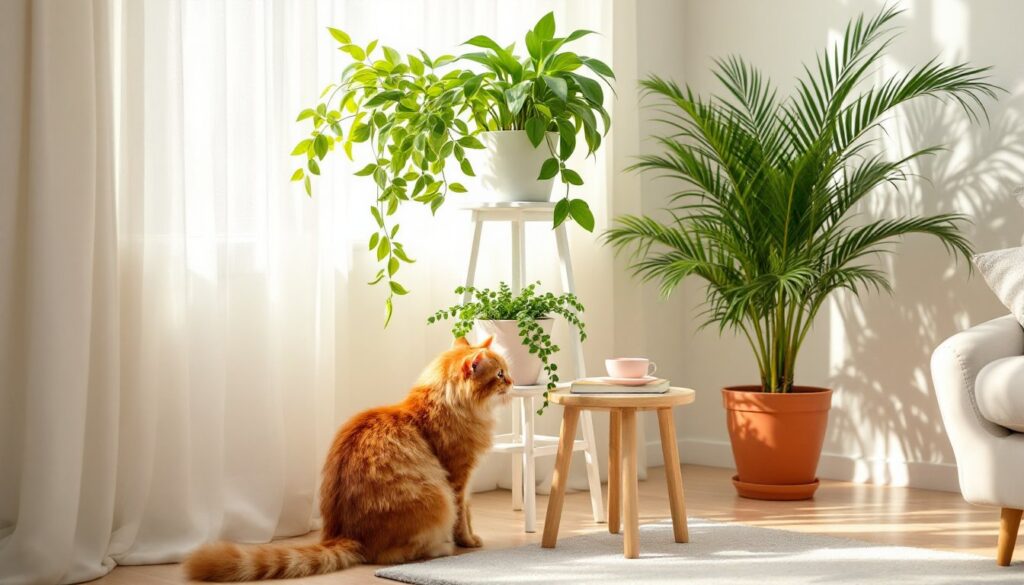
Plant placement should balance design goals with horticultural requirements. Start by mapping your home’s light conditions at different times of day, then match plants to appropriate zones rather than forcing them into spots they can’t tolerate.
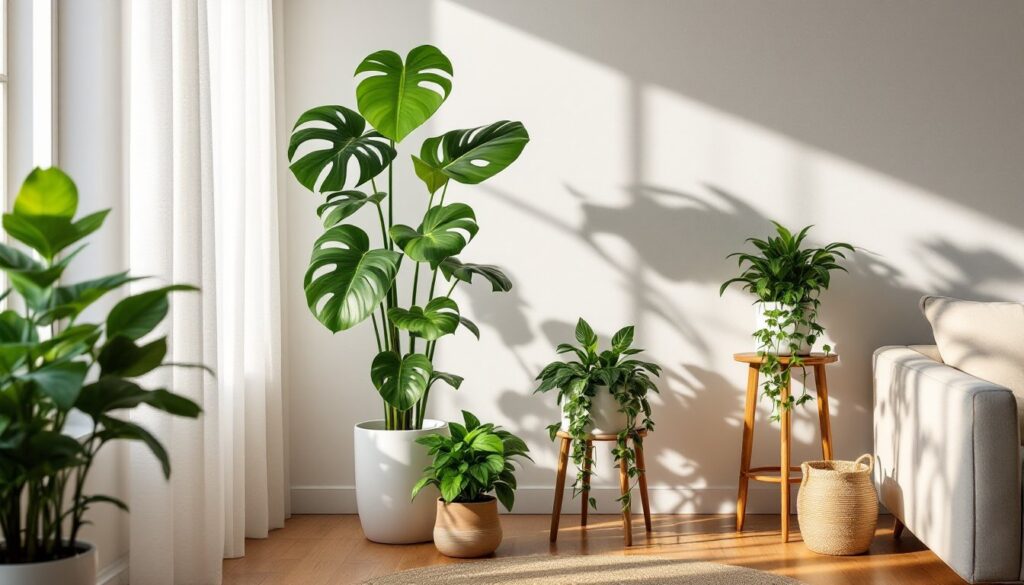
Floor plants like fiddle-leaf figs, dracaenas, and large monstera specimens anchor corners and fill vertical space. Use them to define room boundaries in open floor plans or soften architectural features like support columns. Ensure floor plants sit on surfaces that can handle water, use saucers or waterproof trays beneath pots to protect flooring from moisture damage.
Tabletop and shelf plants add interest at eye level. Pothos, philodendrons, and smaller snake plants work well on shelving units, mantels, and credenzas. Remember that plants near the back of deep shelves receive significantly less light than those at the front edge: rotate positions monthly or choose species that tolerate lower light for back positions.
Hanging plants maximize vertical space and suit trailing varieties like pothos, string of hearts, or spider plants. Install ceiling hooks into joists (not just drywall) using eye bolts rated for at least 20 pounds, a mature hanging plant with wet soil weighs more than most people estimate. Position hanging plants where they won’t obstruct pathways or drip onto furniture during watering.
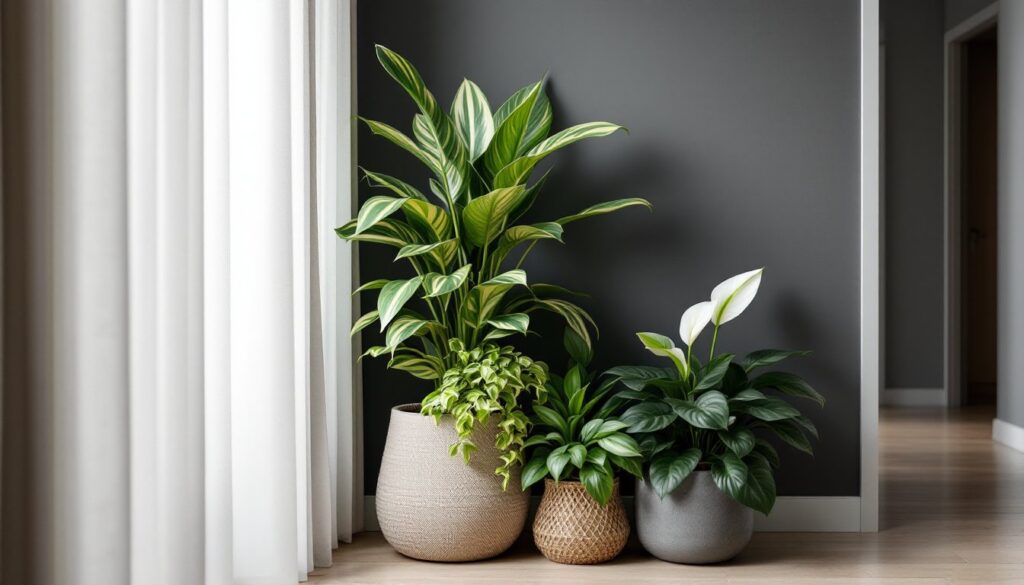
Grouping plants creates visual impact and improves growing conditions through increased local humidity. Cluster plants with similar light and water requirements together, varying heights and leaf shapes for textural contrast. Many common indoor varieties pair well in grouped arrangements.
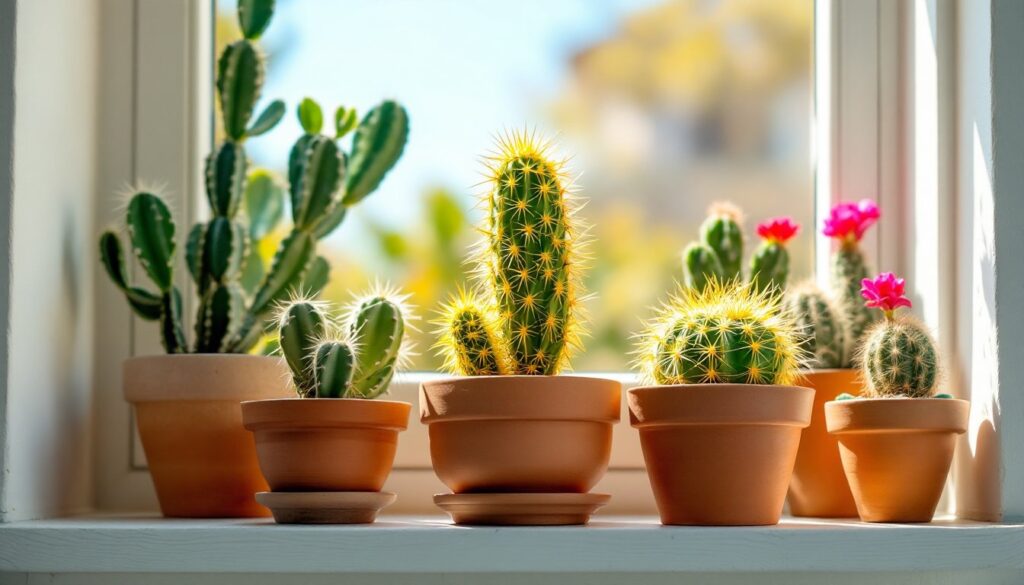
Container selection affects both aesthetics and plant health. Terracotta pots allow soil to dry faster through evaporation, making them ideal for plants prone to root rot. Glazed ceramic and plastic containers retain moisture longer, suiting tropicals that prefer consistent dampness. Whatever material you choose, drainage holes are non-negotiable, drill them yourself if needed using a masonry bit for ceramic or a spade bit for wood planters.
Common Problems and How to Fix Them
Yellow leaves typically indicate overwatering or poor drainage. Check that pots have drainage holes and that you’re not watering on a fixed schedule regardless of soil moisture. Let soil dry appropriately between waterings. If the problem persists and soil smells sour or musty, unpot the plant and inspect roots for black, mushy sections, that’s root rot. Trim affected roots with clean shears, repot in fresh soil, and reduce watering frequency.
Brown leaf tips and edges suggest low humidity, fluoride sensitivity, or salt buildup from over-fertilizing. Increase humidity for tropical species, switch to filtered water if using municipal tap water, and flush soil monthly by running water through the pot until it drains freely from the bottom, this removes accumulated salts. According to comprehensive guides at The Spruce, consistent environmental conditions prevent most leaf browning issues.
Leggy growth with elongated stems and sparse leaves means insufficient light. Plants stretch toward available light when levels are too low. Move the plant closer to a window, add supplemental lighting, or choose a species better suited to lower light conditions. Prune leggy stems to encourage bushier growth once light conditions improve.
Pest infestations are common on stressed plants. Spider mites appear as tiny dots on leaf undersides and leave fine webbing: treat with insecticidal soap or neem oil spray, ensuring full coverage of leaf undersides. Mealybugs look like small cotton tufts on stems and leaf joints: remove with rubbing alcohol on a cotton swab. Fungus gnats indicate overwatering, let soil dry thoroughly between waterings and consider adding a layer of sand or perlite on the soil surface to interrupt their breeding cycle.
Drooping or wilting even though moist soil suggests root problems, often from overwatering or pest damage to roots. If soil is dry and the plant wilts, it’s simply thirsty, water thoroughly. If soil is wet and the plant wilts, you’re likely looking at root rot. Unpot, inspect roots, trim damaged sections, and repot in fresh, well-draining soil.
For plants showing multiple symptoms or declining even though intervention, consider whether basic requirements are being met. Resources like those at Hunker and Country Living provide species-specific care requirements that can help diagnose persistent problems. Sometimes the issue is simply a mismatch between plant needs and available conditions, no amount of intervention will make a sun-loving ficus thrive in a dark bathroom.
When problems arise with struggling plants, proper identification helps determine specific care needs. If a plant continues declining even though addressing obvious issues, it may need rescue protocols including complete repotting, aggressive pruning, or propagation of healthy sections before the entire plant fails.
Safety note: Many common foliage plants are toxic to pets and children if ingested. Pothos, philodendron, dieffenbachia, and ZZ plants all contain calcium oxalate crystals that cause mouth irritation and digestive upset. If you have curious pets or small children, research plant toxicity before purchasing and consider non-toxic alternatives like spider plants, Boston ferns, or peperomias. Keep toxic plants out of reach or choose safer species.