
Table of Contents
ToggleIndoor gardening doesn’t stop when the sun sets or winter clouds roll in. Whether you’re nursing a finicky fiddle leaf fig or starting seedlings in a basement, grow lights can bridge the gap between what nature provides and what your plants actually need. With LED technology advancing and options multiplying, choosing the right lighting setup has gotten easier, and more confusing. This guide cuts through the jargon and walks through the practical decisions that’ll keep your indoor jungle thriving year-round, from light spectrum basics to mounting heights and timer settings.
Key Takeaways
- Grow lights for plants indoor are essential when natural light falls short—most indoor spaces provide only 200-400 foot-candles compared to the 10,000+ foot-candles of full outdoor sun that plants evolved to use.
- LED grow lights are the top choice for home growers in 2026, offering energy efficiency, cooler operation, and 50,000+ hours of lifespan compared to fluorescent alternatives that degrade faster and consume more electricity.
- Match light intensity to your specific plants: low-light varieties like pothos need 50-250 foot-candles, while high-light plants like succulents and seedlings require 1,000+ foot-candles for vigorous growth.
- Mount your lights 6-24 inches above foliage depending on light type and plant needs, and use a timer set for 12-16 hours daily to automate the photoperiod and prevent common problems like leaf stretching or bleaching.
- White reflective surfaces and properly arranged shelving can boost light efficiency by 20-30%, making your grow light setup more cost-effective while supporting thriving plants year-round.
- Monitor your plants’ response weekly rather than relying solely on timers and specs—pale or leggy growth signals insufficient light, while bleached leaves mean lights are too intense or too close.
Why Indoor Plants Need Grow Lights
Most indoor spaces don’t deliver the light intensity plants evolved to use. A south-facing window might seem bright, but it typically provides 200-400 foot-candles at best. Compare that to full sun outdoors: 10,000+ foot-candles. Even sun-loving succulents struggle on a windowsill during short winter days.
Plants use light for photosynthesis, converting light energy into sugars that fuel growth. Without enough light, they stretch toward windows (etiolation), drop leaves, or stop flowering altogether. Low-light tolerant plants like pothos or snake plants survive in dim corners, but they won’t thrive or grow vigorously.
Grow lights supplement or replace natural light, letting you control intensity, duration, and spectrum. This matters most for:
- Starting seeds indoors before transplanting outside
- Overwintering herbs and vegetables when outdoor gardens go dormant
- Growing tropical plants in rooms without strong natural light
- Supporting flowering or fruiting plants that need consistent, intense light
If your plants lean hard toward the window, show pale new growth, or haven’t put out leaves in months, insufficient light is usually the culprit. Adding grow lights can turn struggling specimens into vigorous growers.
Types of Indoor Grow Lights for Plants
LED Grow Lights
LED (light-emitting diode) grow lights dominate the market in 2026 for good reason. They’re energy-efficient, run cool, and last 50,000+ hours, roughly ten years of daily use. Modern LEDs can deliver a full spectrum or be tuned to specific wavelengths (blue for vegetative growth, red for flowering).
Most home growers choose full-spectrum white LEDs that mimic natural sunlight. They’re easier on the eyes than the purple “blurple” lights common a few years back, and they work well for mixed plant collections. Look for fixtures rated in actual wattage (not misleading “equivalent” claims) and a PAR (photosynthetically active radiation) output rating if serious about performance.
LED panels, bulbs, and strip lights fit different setups. Plug-and-play LED bulbs screw into standard sockets and work for a single plant or small shelf. Panel fixtures cover larger areas and often include dimming or spectrum controls. LED strips are flexible for custom builds inside cabinets or under shelves.
Expect to pay more upfront than fluorescents, but LEDs recoup the cost through lower electricity bills and longevity. Many common indoor house plants thrive under affordable LED setups.
Fluorescent Grow Lights
Fluorescent tubes (T5, T8, T12) and compact fluorescent lamps (CFLs) remain budget-friendly options for hobbyists. T5 fixtures are the most efficient fluorescent choice, delivering good light output in a slim profile. They’re ideal for seedlings, herbs, and low-to-medium light plants.
Fluorescents produce less heat than old-school incandescent or HID (high-intensity discharge) lamps, so they can sit closer to foliage without burning leaves, typically 6-12 inches away. But, they’re less efficient than LEDs and need replacement every 10,000-20,000 hours as output degrades.
For a small herb garden on a kitchen counter or a seed-starting rack in the garage, a two- or four-tube T5 fixture gets the job done without very costly. Just know you’ll use more electricity over time compared to LEDs, and bulbs will need swapping every couple of years.
If you’re exploring options for specific plant needs, understanding which grow lights for house plants perform best can save trial and error.
How to Choose the Right Grow Light for Your Indoor Plants
Start by assessing what you’re growing and where. Leafy greens, herbs, and foliage plants need less intense light than fruiting tomatoes or flowering orchids. A pothos in a dim office needs a different setup than a tray of seedlings.
Match the light intensity to plant requirements:
- Low-light plants (pothos, philodendron, snake plant): 50-250 foot-candles or roughly 100-400 μmol/m²/s PAR
- Medium-light plants (most tropicals, African violets): 250-1,000 foot-candles or 400-800 μmol/m²/s PAR
- High-light plants (succulents, fruiting vegetables, seedlings): 1,000+ foot-candles or 800+ μmol/m²/s PAR
Check the fixture’s coverage area. A single bulb might illuminate a 1-2 square foot spot, while a panel fixture can cover 2-4 square feet or more. Measure your shelf, table, or grow rack and pick a light that blankets the whole area evenly. Plants on the edges shouldn’t be starved.
Consider adjustability. Lights with dimming controls let you dial intensity up as plants mature. Hanging kits or adjustable stands let you change height as seedlings grow or plants stretch. Keeping the light at the right distance prevents burning or stretching.
Power consumption matters for your electric bill. LEDs typically draw 10-50 watts for small setups, while larger panels or fluorescent racks can pull 100+ watts. Calculate runtime (most plants need 12-16 hours daily) and compare wattage to estimate costs.
If you’re supplementing natural light rather than replacing it entirely, a lower-wattage setup often suffices. Many house plants that don’t need sunlight still benefit from supplemental lighting during darker months.
Setting Up Your Indoor Plant Lighting System
Safety first: Grow lights get warm, even LEDs. Keep fixtures away from flammable materials (curtains, paper, dry plants). Use grounded outlets and avoid daisy-chaining multiple high-wattage fixtures on a single power strip. If running lights in a damp basement or greenhouse, consider GFCI-protected outlets to prevent shocks.
Mounting height depends on light type and plant stage. For LEDs, start 12-24 inches above foliage for seedlings and low-light plants, 6-12 inches for high-light or flowering plants. Fluorescents can sit closer, 6-12 inches, since they run cooler. Watch for signs: leaves bleaching or curling mean the light’s too close: stretching stems mean it’s too far.
Use a timer to automate the daily light cycle. Most plants do well with 12-16 hours of light and 8-12 hours of darkness. Seedlings and vegetative growth favor longer days: flowering plants often need shorter photoperiods (some require specific day lengths to bloom). A basic mechanical or digital timer costs under $15 and eliminates the hassle of manual switching.
Reflective surfaces boost efficiency. White walls, mylar sheets, or aluminum foil redirect stray light back onto plants, reducing wasted energy. In a grow tent or enclosed rack, reflective lining can increase effective light by 20-30%.
Arrange plants by light needs. Put high-light demanders directly under the fixture’s center, where intensity peaks. Tuck shade-tolerant plants at the edges or lower shelves. Rotate pots every few days so all sides get even exposure and growth stays balanced.
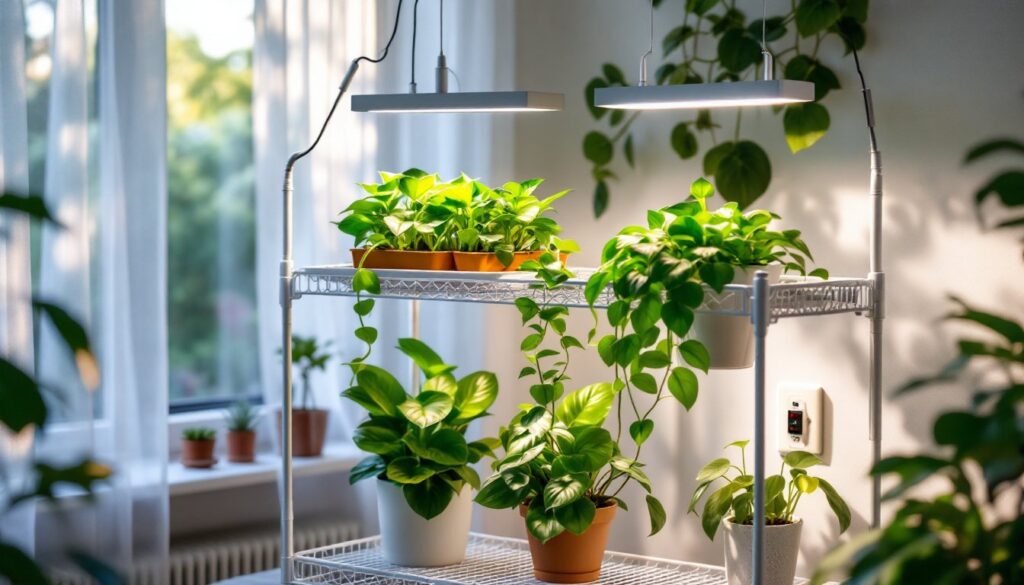
For larger collections, shelf racks with multiple tiers and dedicated lights per level maximize vertical space. Wire shelving units (common in garages) pair well with clip-on or hanging fixtures. If odor or humidity is a concern (rare for ornamentals, more common with edibles), add a small fan for air circulation, it also strengthens stems.
Many growers seeking expert recommendations find that investing in quality fixtures and proper setup pays off in healthier plants and fewer headaches.
Best Practices for Using Indoor Grow Lights
Monitor plant response, not just the clock. Even with timers and specs, plants tell you what’s working. New growth should be compact and vibrant. Pale, stretched, or leggy stems signal insufficient light. Scorched leaf tips or bleached spots mean intensity or proximity needs adjustment.
Adjust as seasons change. Natural light varies through the year. In summer, a south window might need only a few supplemental hours: in winter, you may run lights all day. Dim or shorten light duration if plants show stress (leaf drop, browning edges), and increase if growth slows.
Keep fixtures clean. Dust on bulbs or panels blocks light, wipe them down monthly with a dry cloth (unplug first). For fluorescents, replace tubes when they start flickering or after 12-18 months of heavy use, even if they still glow. Output degrades before they burn out.
Combine light with proper care. More light won’t fix root rot, nutrient deficiencies, or pests. Water and fertilize according to increased growth rates, plants under strong light photosynthesize more and need more water and nutrients. Use a balanced houseplant fertilizer at half strength every few weeks during active growth.
Eye protection: If using high-intensity or UV-supplemented lights, wear sunglasses or safety glasses when working close for extended periods. Standard white LEDs are safe, but some specialty fixtures include UV wavelengths that can strain eyes.
Document what works. Snap photos weekly, note light height and duration, and track which plants respond best. This helps you dial in settings and troubleshoot problems. Many fragrant indoor plants or finicky specimens have specific light preferences that trial and error reveal.
Finally, don’t overbuy. Start with one fixture and a few plants. Once you’ve got a handle on timers, spacing, and watering adjustments, scale up. Grow lights are an investment, but they’re modular, add more as your collection (and confidence) expands.
For broader guidance on setup tips and product reviews, trusted home and garden resources provide tested recommendations that align with real-world results. When paired with thoughtful observation and solid plant identification skills, grow lights transform indoor gardening from guesswork into a reliable, year-round pursuit. Additional insights from sources like The Spruce can round out your knowledge base as you refine your setup.