
Table of Contents
ToggleTall house plants do more than fill vertical space, they anchor a room, soften hard architectural lines, and create living focal points that furniture alone can’t match. Whether you’re working with a sun-drenched corner or a dim hallway, there’s a tall indoor plant that’ll thrive without constant fussing. In 2026, homeowners are ditching generic gallery walls for statement greenery that commands attention and cleans the air. This guide covers seven proven varieties, from bright-light lovers to low-light champions, with straightforward care requirements and realistic growth expectations. No fluff, just practical advice for picking and placing indoor plants tall enough to earn their square footage.
Key Takeaways
- Tall house plants anchor rooms and create visual focal points by utilizing vertical space, making standard ceilings feel more generous while serving as functional room dividers in open-concept layouts.
- Large-leaf tall indoor plants improve air quality measurably by filtering more VOCs per hour than smaller specimens, with a 6-foot plant processing significantly more formaldehyde and benzene.
- Fiddle Leaf Figs deliver dramatic architectural impact with 12–18 inch leaves but require 6+ hours of bright indirect light and careful watering—only water when soil is dry 2 inches deep to avoid root rot.
- Bird of Paradise plants tolerate more direct sun than Fiddle Leaf Figs and forgive occasional missed waterings, reaching 5–7 feet while adapting to average household humidity levels.
- Dracaenas and Snake Plants thrive in low-light conditions where most tall house plants struggle, making them ideal for hallways, offices, and interior rooms without direct window access.
- Mature tall plants in properly sized pots (14–18 inches) require less frequent watering and tolerate minor neglect better than smaller specimens, simplifying care for homeowners with irregular schedules.
Why Tall House Plants Are Perfect for Modern Interiors
Vertical impact is what separates a decorated room from a designed one. Tall plants indoor leverage the often-ignored upper third of a space, drawing the eye upward and making standard 8-foot ceilings feel more generous. They’re particularly effective in open-concept layouts where traditional room dividers feel heavy, a well-placed Dracaena or Bird of Paradise creates visual zones without blocking sightlines or natural light.
From a practical standpoint, house plants tall enough to exceed furniture height (typically 4–8 feet) simplify decorating decisions. One statement plant in a corner does the work of multiple smaller pots clustered on shelves or side tables. They also cover awkward architectural features, think blank walls flanking a fireplace or the dead space beside a staircase.
Air quality benefits scale with leaf surface area. NASA’s Clean Air Study found that larger specimens filter more volatile organic compounds (VOCs) per hour than smaller counterparts. A 6-foot Rubber Plant processes significantly more formaldehyde and benzene than a desk-sized succulent. For homeowners tackling indoor air quality without installing mechanical systems, tropical big leaf varieties offer measurable improvement alongside their visual presence.
Maintenance logistics favor larger plants, too. Mature specimens in appropriately sized pots (typically 14–18 inches in diameter for floor plants) require less frequent watering than small pots that dry out in days. Their established root systems tolerate minor neglect better than juvenile plants. Just be honest about your commitment level, tall doesn’t mean indestructible, and some varieties demand consistent humidity or bright light to avoid looking shabby.
Best Tall House Plants for Bright Spaces
Fiddle Leaf Fig
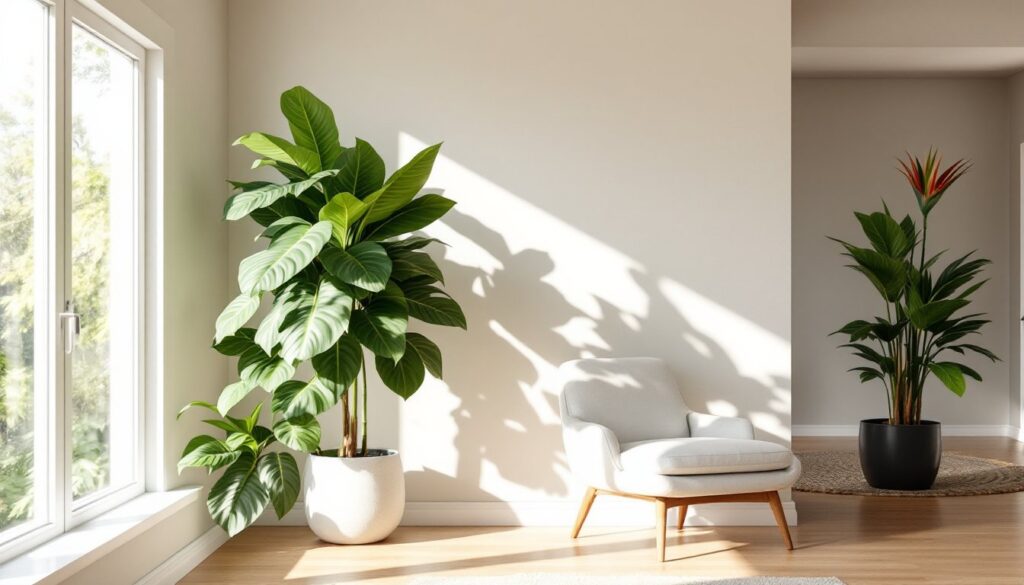
Ficus lyrata tops every “statement plant” list for good reason: those 12–18 inch wide, violin-shaped leaves create instant architectural drama. Mature specimens reach 6–10 feet indoors, making them ideal for corners with southern or western exposure. They need 6+ hours of bright, indirect light daily, a few feet back from an unobstructed window works well. Direct sun scorches the leaves: too little light causes leggy growth and leaf drop.
Watering is where most people fail. These plants prefer to dry out slightly between waterings, stick your finger 2 inches deep into the soil, and water only when it’s dry at that depth. Overwatering causes brown spots and root rot: underwatering leads to crispy edges and dropping lower leaves. Use a well-draining potting mix (standard houseplant soil amended with perlite or orchid bark) and ensure the pot has drainage holes.
Maintenance reality check: Fiddle Leaf Figs are finicky about relocation. Once you find a spot where it’s happy, leave it there. Rotating the pot 90 degrees every two weeks promotes even growth, but moving it across the room can trigger stress leaf drop. Wipe down leaves monthly with a damp cloth to remove dust and improve photosynthesis. Budget $40–$150 depending on height: larger specimens from garden centers often acclimate better than mail-order plants.
Bird of Paradise
Strelitzia reginae brings tropical scale without tropical fussiness. Indoor specimens typically reach 5–7 feet, with 18–24 inch long paddle-shaped leaves that split naturally as they mature (it’s not damage, it’s how the plant handles wind stress in its native habitat). They tolerate more direct sun than Fiddle Leaf Figs, making them suitable for south-facing windows or bright sunrooms.
These plants are forgiving with water. Soil should stay lightly moist spring through fall, drying slightly in winter when growth slows. They handle the occasional missed watering better than soggy roots. Use a loam-based potting mix with good drainage. Bird of Paradise appreciates humidity but adapts to average household levels (40–50%) without the crispy leaf tips that plague some common indoor varieties.
Space planning matters: The leaves fan outward, so allow a 3–4 foot diameter footprint. They’re heavy feeders during the growing season, apply a balanced 10-10-10 liquid fertilizer monthly from March through September, then hold off in winter. Mature plants (5+ years old) may bloom indoors if light is sufficient, though it’s not guaranteed. Expect to pay $30–$120 based on size. Repot every 2–3 years in spring, going up one pot size to prevent the plant from becoming root-bound and tipping over.
Top Low-Light Tall House Plants
Dracaena Varieties
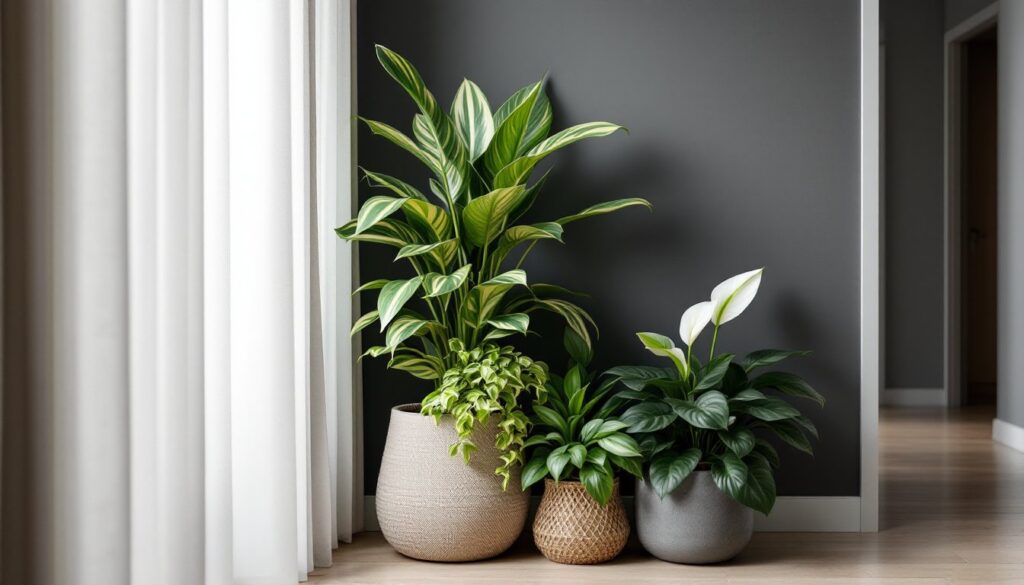
Dracaenas are the workhorses of low-light interiors. Dracaena marginata (Dragon Tree), D. fragrans (Corn Plant), and D. deremensis (Janet Craig) all tolerate north-facing windows and offices with only fluorescent lighting. Most varieties reach 4–8 feet indoors, with slow but steady upward growth that won’t outpace your ceiling height overnight.
Light flexibility is their superpower. They’ll grow faster in bright, indirect light but survive, and even look decent, in spaces where many plants would etiolate and collapse. Low light slows growth and may dull variegation slightly in striped varieties, but won’t kill the plant. This makes them ideal for entryways, hallways, and interior rooms without direct window access.
Watering needs are minimal. Let the top 2–3 inches of soil dry completely between waterings, which might mean every 10–14 days depending on pot size and season. Dracaenas are sensitive to fluoride in tap water, brown leaf tips are often the result. If your municipality adds fluoride, use filtered or distilled water, or let tap water sit uncovered for 24 hours before watering to allow some chemicals to dissipate.
Practical advantages: Dracaenas tolerate irregular care schedules better than most tall plants. They’re slow to show stress, giving you time to correct course before damage is permanent. For those exploring grow lights for supplemental illumination, Dracaenas respond well to even basic LED shop lights placed overhead. Pricing runs $25–$100, with mature specimens available at big-box garden centers year-round.
Snake Plant
Sansevieria trifasciata (recently reclassified as Dracaena trifasciata, though most retailers still use the old name) has tall cultivars like ‘Laurentii’ and ‘Black Gold’ that reach 3–5 feet. The stiff, upright leaves grow in dense clumps, creating vertical lines that complement modern or minimalist interiors. They’re nearly indestructible, the kind of plant that survives in rental apartments and airport atriums.
These plants thrive on neglect in ways other <a href="https://www.bhg.com/gardening/houseplants/care/tall-houseplants/” target=”_blank” rel=”noopener nofollow”>houseplants don’t. Water only when soil is completely dry, which might be every 3–4 weeks in winter. Overwatering is the only common cause of death, leading to mushy, rotting leaf bases. Use a cactus or succulent mix for drainage, and choose pots with ample drainage holes. Snake Plants grow in anything from bright indirect light to dim corners, though growth is glacially slow in true low-light conditions.
Structural benefits: The rigid leaves don’t droop or sprawl, so they maintain a tight footprint even as they grow taller. This makes them ideal for narrow spaces like beside a bookshelf or in a bathroom corner. They’re also one of the few tall house plants that tolerates drafts and temperature fluctuations near exterior doors. About maintenance challenges with other house plants that don’t need sunlight, Snake Plants consistently outperform on the durability scale.
Expect to pay $20–$80 depending on height and pot count. Mature specimens are sometimes sold as multiple plants in one pot, which creates instant fullness. Repot only when roots push through drainage holes, these plants actually bloom more readily when slightly root-bound. Divide clumps in spring if you want to propagate or thin out overcrowded pots.