
Table of Contents
ToggleIndoor plants can transform a space, but they won’t thrive without proper light. Whether someone’s growing a fiddle-leaf fig in a basement apartment or trying to keep herbs alive through a gray winter, understanding plant lighting is the difference between lush growth and leggy, pale disappointment. Natural light isn’t always enough, and not all artificial options deliver the same results. This guide breaks down what indoor plants actually need, the tools available, and how to set them up for success, no guesswork required.
Key Takeaways
- Indoor plants need adequate light to fuel photosynthesis, with intensity requirements varying by species—from 200+ foot-candles for low-light plants to 1,000+ for flowering varieties.
- LED grow lights are the most cost-effective and efficient option for indoor plant lighting, offering energy savings, long lifespan (25,000–50,000 hours), and the flexibility to adjust spectrum and intensity for different growth stages.
- Position light for plants 6–12 inches above foliage for LEDs and establish a consistent 12–16 hour daily photoperiod using a timer to maintain regular growth cycles and prevent stress.
- Supplement natural light strategically—south-facing windows are best in the Northern Hemisphere, but seasonal changes and building blockages often make artificial lighting necessary for year-round growth.
- Monitor plant response over 2–3 weeks and adjust light height or duration based on visual cues: compact vibrant growth indicates proper lighting, while stretched stems or pale leaves signal insufficient light.
- Maximize efficiency by using reflective surfaces (white paint, aluminum foil, Mylar), ensuring proper ventilation with a small fan, and matching fixture type and wattage to your growing area and plant needs.
Why Indoor Plants Need the Right Light
Light drives photosynthesis, the process plants use to convert energy into growth. Without adequate light, even the hardiest houseplant will struggle. Chlorophyll absorbs light in the blue and red spectrum primarily, which fuels the chemical reactions that produce sugars and starches, the plant’s food.
Indoor environments often lack the intensity and duration of outdoor sunlight. A sunny windowsill might provide 200–500 foot-candles, while many flowering or fruiting plants need 1,000+ foot-candles to perform well. Low-light tolerant species like pothos or snake plants can survive on less, but “low-light” doesn’t mean “no light.” Every plant has a minimum threshold.
Symptoms of insufficient light include elongated stems (etiolation), small or pale leaves, leaf drop, and failure to flower. If a plant leans hard toward the nearest window or stops producing new growth during spring and summer, it’s signaling a light deficit. Conversely, too much direct sun can scorch leaves, especially on species adapted to forest understories.
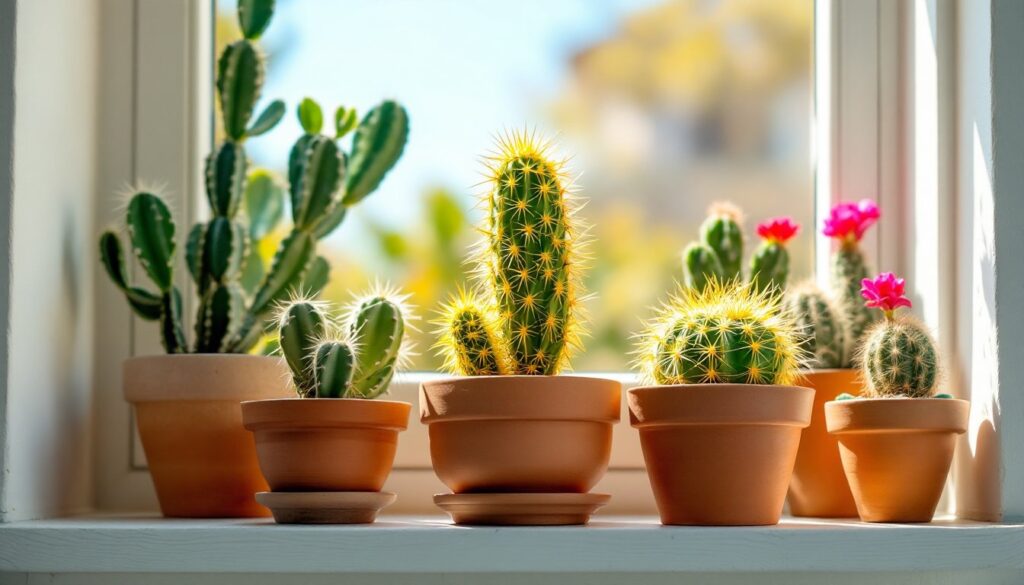
Understanding a plant’s native habitat helps. Cacti and succulents evolved in deserts with intense, direct sun. Ferns and aroids come from shaded jungle floors. Matching light conditions to the plant’s origin, or supplementing when necessary, is the foundation of indoor plant care.
Understanding Different Types of Indoor Plant Lighting
Natural Light vs. Artificial Light
Natural light is free, full-spectrum, and familiar to plants. South-facing windows in the Northern Hemisphere deliver the most intense light, often suitable for sun-loving species. East- and west-facing windows provide moderate light, good for a wide range of houseplants. North-facing windows offer the least intensity, appropriate only for shade-tolerant varieties.
But natural light has limits. Seasonal changes reduce day length and intensity in fall and winter. Buildings, trees, and weather can block or diffuse sunlight. For consistent year-round growth, or for spaces with no windows, artificial lighting fills the gap.
Artificial grow lights can deliver targeted spectrums, adjustable intensity, and programmable schedules. They’re not a perfect replacement for sunlight, but modern options come close. The key is choosing a light source that provides the right spectrum and enough intensity for the plant’s needs.
LED, Fluorescent, and Incandescent Options
LED grow lights dominate the market in 2026 for good reason. They’re energy-efficient, running cool enough to place close to foliage without burning. Many models offer full-spectrum output or tunable red/blue ratios. Expect 30–50 watts actual draw for a standard fixture covering a 2×2-foot area. LEDs last 25,000–50,000 hours, making them cost-effective even though higher upfront prices. Look for lights with a PAR (photosynthetically active radiation) rating of at least 200 µmol/m²/s for leafy greens and foliage plants, higher for flowering species.
Fluorescent tubes (T5, T8) and compact fluorescents (CFLs) remain viable, especially for budget setups. T5 fixtures produce strong light in the blue spectrum, excellent for seedlings and leafy growth. They’re less efficient than LEDs and need replacing every 10,000–20,000 hours as output degrades. A 4-foot, 4-bulb T5 fixture draws around 216 watts and covers roughly a 4×2-foot area.
Incandescent bulbs are obsolete for plant growth. They emit mostly heat and infrared, with minimal usable blue or red spectrum. They’ll keep a plant barely alive but won’t support healthy growth.
For hobbyists serious about growing a variety of houseplants, LEDs offer the best balance of performance, longevity, and operating cost. Fluorescents work for smaller setups or tight budgets. Skip incandescents entirely.
How to Choose the Best Grow Light for Your Indoor Plants
Start by assessing plant requirements. High-light plants (citrus, peppers, tomatoes, most succulents) need full-spectrum LEDs with at least 400–600 µmol/m²/s PAR. Medium-light plants (most tropical foliage, herbs, African violets) thrive under 200–400 µmol/m²/s. Low-light species (pothos, snake plants, ZZ plants) can manage with less, but even they benefit from supplemental light in dim rooms.
Next, consider coverage area. A single LED bulb in a desk lamp won’t support more than one small plant. Panel-style LED fixtures or multi-bulb fluorescent setups cover larger groupings. Measure the shelf, table, or grow rack, then match fixture dimensions accordingly. Most manufacturers list coverage area at a given hanging height.
Spectrum matters. Full-spectrum white LEDs mimic daylight and work well for general use, they also look more natural in living spaces than the purple glow of red/blue LEDs. If appearance doesn’t matter (basement, closet, garage), red/blue panels can be slightly more efficient for vegetative growth. For flowering and fruiting, a spectrum with enhanced red wavelengths (around 660 nm) encourages blooms.
Check wattage and actual power draw, not equivalency claims. A light marketed as “100W equivalent” might only draw 20W actual, which determines energy cost and heat output. Calculate runtime: if the light runs 12–16 hours daily, energy-efficient LEDs save significantly over time compared to fluorescents.
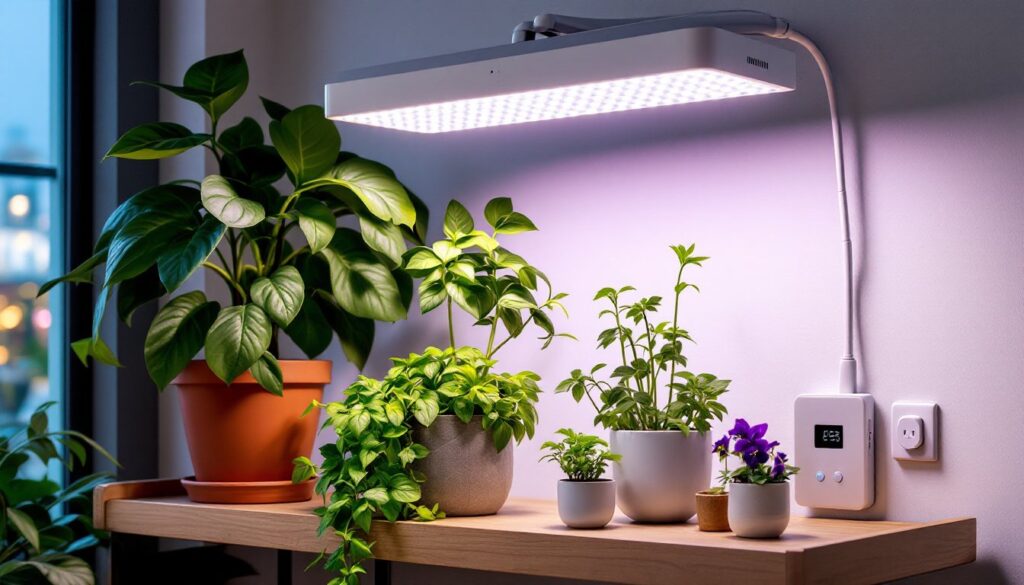
Dimmability and timer compatibility add convenience. Many advanced grow light systems include built-in timers or smartphone controls, letting users automate photoperiods. For less expensive fixtures, plug-in timers (available at any hardware store) handle scheduling.
Budget ranges vary. Expect $25–$60 for a basic LED panel suitable for a few small plants, $80–$150 for a quality full-spectrum fixture covering 2×2 to 2×4 feet, and $200+ for commercial-grade multi-bar systems. Fluorescent T5 fixtures start around $40–$80 for a 2-foot, 2-bulb setup.
Avoid generic “plant lights” with no spectrum or PAR data. Reputable brands publish photometric testing. If the product listing doesn’t specify spectrum, PAR, or actual wattage, it’s likely underperforming.
Placement and Setup Tips for Maximum Growth
Hang or position grow lights 6–12 inches above foliage for LEDs, 12–24 inches for fluorescents, adjusting based on plant response. If leaves bleach or burn, raise the light. If plants stretch or lean, lower it or increase intensity.
Photoperiod, the daily light duration, drives growth cycles. Most foliage houseplants do well with 12–16 hours of light per day. Flowering plants often need specific triggers: short-day plants (poinsettias, Christmas cacti) bloom when nights exceed 12 hours, while long-day plants (lettuce, spinach) flower under extended light. For general tropical foliage, 14 hours on, 10 hours off mimics equatorial conditions.
Use a timer to maintain consistency. Plants respond to regular cycles: erratic schedules stress them. Plug-in mechanical or digital timers cost $8–$20 and eliminate guesswork.
Rotate plants every few days if light comes from one direction, even under artificial sources. This prevents lopsided growth. For shelving or multi-tier setups, ensure each level has its own fixture, light intensity drops sharply with distance, and lower shelves won’t benefit from lights aimed at upper tiers.
Ventilation matters when using multiple fixtures in enclosed spaces. While LEDs run cool, even modest heat buildup in a closet or cabinet can raise ambient temperature and humidity. A small clip-on fan improves air circulation and strengthens stems.
Reflective surfaces boost efficiency. Line grow areas with white paint, aluminum foil, or Mylar sheets to redirect stray light back onto plants. This can increase effective light by 10–20% without adding fixtures.
Monitor plant response over 2–3 weeks. Proper grow light usage should produce compact, vibrant growth with rich leaf color. Adjust height, duration, or intensity as needed. Some trial and error is normal, species vary, and even cultivars within a species can have slightly different tolerances.
Safety note: Ensure fixtures are rated for the environment. In humid rooms (bathrooms, kitchens), use lights with moisture-resistant housings. Don’t overload outlets, calculate total wattage and use power strips with surge protection and appropriate amp ratings. Keep cords away from water sources and inspect regularly for fraying.
Conclusion
Getting light right unlocks the full potential of an indoor garden. By understanding plant needs, choosing appropriate fixtures, and fine-tuning placement and timing, anyone can grow healthy, vibrant houseplants year-round, even in spaces that never see direct sun. The tools and knowledge are accessible: the results are worth the effort.