
Table of Contents
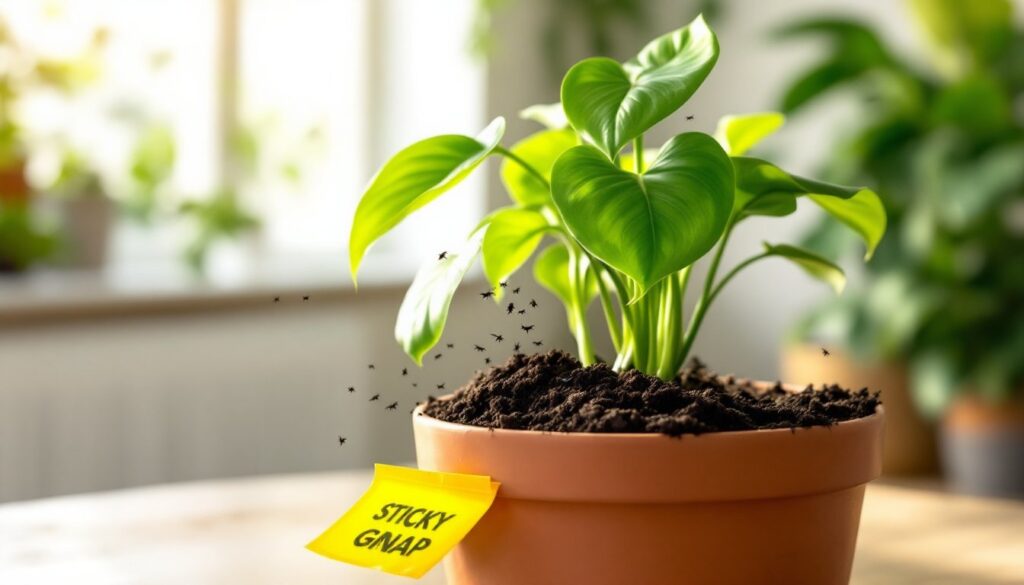
ToggleThose tiny black specks hovering around a beloved pothos or peace lily aren’t just annoying, they’re fungus gnats, and they’re feeding on the organic matter in the potting soil. Left unchecked, their larvae can damage roots and spread disease. The good news? With the right combination of traps, soil treatments, and watering adjustments, it’s possible to eliminate them completely and prevent future infestations. This guide walks through proven methods to kill gnats at every stage of their life cycle, from eggs in the soil to adults buzzing around leaves.
Key Takeaways
- Fungus gnats thrive in overwatered potting soil—the primary cause is keeping soil too moist, so letting the top 1–2 inches dry between waterings is essential to prevent infestations.
- Kill gnats in house plants using a three-stage approach: eliminate adult gnats with yellow sticky traps or neem oil spray, destroy soil larvae with Bti (Bacillus thuringiensis) soil drenches repeated every 5–7 days, and allow soil to dry more between waterings.
- Bacillus thuringiensis israelensis (Bti) is the most effective biological control for gnat larvae, harmless to humans and pets, and works by saturating the top 2–3 inches of soil where larvae live.
- Yellow sticky traps and apple cider vinegar traps provide immediate reduction of adult gnats while soil treatments work, though these methods must be paired with larval control to break the reproductive cycle.
- Prevent future gnat infestations by ensuring pots have drainage holes, sterilizing potting soil before use, removing standing water from saucers, and quarantining new plants for 2–3 weeks before introducing them to your collection.
Understanding Why Gnats Infest Your Indoor Plants
Fungus gnats (Bradysia species) are attracted to moist organic matter in potting soil. They lay eggs in the top 2–3 inches of soil, where larvae hatch and feed on fungi, decaying plant material, and sometimes tender root hairs.
The most common cause of an infestation is overwatering. Soil that stays wet for extended periods creates ideal breeding conditions. Plants in pots without drainage holes, heavy potting mixes that retain moisture, or watering on a fixed schedule rather than checking soil moisture all contribute to the problem.
Another factor is the quality of potting soil. Bags left open in storage or mixes containing high levels of uncomposted organic matter can harbor gnat eggs or larvae before they’re even added to a pot. While common indoor house plants like ferns and ficus prefer evenly moist soil, that doesn’t mean waterlogged conditions.
Adult gnats are weak fliers and tend to stay near the soil surface. They’re most active during watering or when pots are disturbed. One generation completes its cycle in about 3–4 weeks, so populations can explode quickly if conditions remain favorable.
Immediate Action: Quick Methods to Kill Gnats on Contact
When gnats are swarming, the first step is to knock down the adult population. This doesn’t solve the root problem, larvae in the soil, but it stops immediate reproduction and gives other treatments time to work.
Insecticidal soap or neem oil spray kills adult gnats on contact. Mix a solution according to label directions (typically 1–2 tablespoons per quart of water for neem oil) and spray both sides of leaves, stems, and the soil surface. Repeat every 3–4 days for two weeks. These products break down quickly and are safe for most houseplants, but always test on a small area first.
A handheld vacuum works surprisingly well for immediate reduction. Run it over the soil surface and around foliage in the morning, when gnats are less active. Empty the canister into a sealed plastic bag and dispose of it outside.
Yellow sticky traps placed just above the soil line capture adults. The bright color attracts gnats, and they get stuck on the adhesive surface. These won’t eliminate an infestation on their own, but they provide a visual indicator of population size and help reduce breeding adults. Position 1–2 traps per pot, replacing them weekly or when covered.
Avoid using household aerosol sprays or bleach solutions. They can damage foliage and aren’t formulated for soil-dwelling larvae.
The Soil Drench Method for Eliminating Gnat Larvae
Killing larvae in the soil is critical. Adult gnats only live 7–10 days, but one female can lay 200+ eggs in that time. Breaking the reproductive cycle requires targeting the immature stages.
Bacillus thuringiensis israelensis (Bti) is the most effective biological control. This naturally occurring bacterium produces a toxin that kills gnat and mosquito larvae but is harmless to humans, pets, and plants. It’s sold as Mosquito Bits or Gnatrol.
To apply:
- Dissolve 1 tablespoon of Mosquito Bits per gallon of water. Let it steep for 10–15 minutes, then strain.
- Water plants thoroughly with the Bti solution, saturating the top 2–3 inches of soil where larvae live.
- Repeat every 5–7 days for 3 weeks to catch newly hatched larvae from any remaining eggs.
Bti remains active in moist soil for several days but breaks down in sunlight, making it safe for indoor use. Studies from The Spruce confirm its efficacy in home environments without chemical residue.
Hydrogen peroxide is a faster-acting alternative. Mix one part 3% hydrogen peroxide (the standard drugstore strength) with four parts water. Pour it directly onto the soil until it drains from the bottom of the pot. The solution fizzes on contact with organic matter, killing larvae and eggs. The soil may temporarily bubble, this is normal. Hydrogen peroxide breaks down into water and oxygen within hours, leaving no harmful residue. It also aerates compacted soil.
Allow the soil to dry more than usual between treatments. Larvae need moisture to survive: letting the top 1–2 inches dry out interrupts their development.
Natural Home Remedies That Actually Work
Several low-cost, non-toxic methods can supplement commercial treatments or serve as primary control for light infestations.
Apple Cider Vinegar Traps
Adult gnats are drawn to the smell of fermenting organic material. A simple trap uses this behavior against them.
Fill a shallow dish or jar with ½ inch of apple cider vinegar. Add 2–3 drops of liquid dish soap to break the surface tension so gnats sink instead of floating. Cover the container with plastic wrap secured with a rubber band, then poke 6–8 small holes (toothpick-sized) in the top. Place the trap on the soil surface or nearby.
Gnats enter through the holes, can’t escape, and drown. Replace the solution every 3–4 days. This method works best alongside soil treatments, as it only captures adults.
Sand or diatomaceous earth (DE) top dressing creates a physical barrier. Spread a ½-inch layer of horticultural sand (not sandbox sand, which is too fine) or food-grade diatomaceous earth over the soil surface. Both materials dry quickly and discourage egg-laying. DE also has microscopic sharp edges that damage soft-bodied larvae.
Wear a dust mask when applying DE, it’s non-toxic but irritating if inhaled. Water from the bottom (via a saucer) to keep the top layer dry, or water carefully without disturbing the barrier.
Cinnamon powder has mild antifungal properties. Dusting the soil surface with a thin layer can reduce the fungi that larvae feed on, making the environment less hospitable. It’s not a standalone solution but pairs well with other methods for houseplant pests.
Prevention Strategies to Keep Gnats Away Permanently
Once an infestation is cleared, adjusting care routines prevents recurrence.
Water only when the top 1–2 inches of soil are dry. Stick a finger into the soil or use a moisture meter. Many houseplants tolerate slight drying between waterings better than constant wetness. For moisture-loving species, ensure pots have drainage holes and use a well-draining potting mix amended with perlite or bark chips.
Sterilize potting soil before use. Baking soil at 180–200°F for 30 minutes (spread on a baking sheet, covered with foil) kills eggs and larvae. Let it cool completely before potting. Alternatively, microwave small batches in a covered, microwave-safe container for 90 seconds per pound. This adds a step, but it’s worthwhile for bulk soil or opened bags stored for months.
Large plants like tropical big leaf house plants sometimes need bottom watering to avoid constant soil disturbance. Set pots in a tray of water for 15–20 minutes, letting the soil wick moisture upward. This keeps the top layer drier, discouraging gnats.
Remove standing water from saucers within 30 minutes of watering. It’s a breeding site not just for gnats, but also mosquitoes if windows are open.
Quarantine new plants for 2–3 weeks. Even nursery stock can carry gnats. Inspect soil carefully and treat preventively with a Bti drench if there’s any sign of tiny black flies.
Managing indoor plants is discussed in depth on Hunker, which covers environmental factors that attract pests.
Consider repotting heavily infested plants. Knock off as much old soil as possible, trim any damaged roots, and replant in fresh, sterilized mix. Dispose of the old soil in a sealed bag, don’t reuse it or add it to outdoor compost where larvae can survive.
If pets are present, verify treatments are safe. Bti, neem oil, and diatomaceous earth are generally pet-friendly, but keep curious animals away from treated pots until surfaces dry. Cross-check any plant species against lists of what house plants are toxic to dogs to avoid separate health risks.
Conclusion
Eliminating fungus gnats requires a multi-pronged approach: kill adults with traps or sprays, destroy larvae with soil drenches, and adjust watering habits to remove the conditions that attracted them. Consistency matters, skipping a treatment round or reverting to overwatering undoes progress. With patience and the right methods, it’s entirely possible to reclaim a gnat-free indoor garden. For more specialized care tips, resources like Gardenista offer seasonal plant management strategies that complement pest control efforts.