
Table of Contents
ToggleLarge leaf house plants bring instant architectural presence to a room, turning blank corners into focal points and dead spaces into living galleries. Unlike smaller foliage varieties that whisper, these plants make bold statements, filling vertical space, softening hard edges, and adding texture that paint alone can’t achieve. They’re particularly effective in modern interiors with clean lines and neutral palettes, where their oversized leaves create contrast without clutter. For DIYers looking to refresh a space without demolition or paint fumes, large leaf plants offer one of the fastest, most reversible transformations available.
Key Takeaways
- Large leaf house plants instantly transform blank spaces into focal points by filling vertical space and softening hard edges with minimal design commitment compared to renovation or paint.
- Monstera deliciosa, fiddle leaf figs, and bird of paradise are top large leaf varieties that tolerate moderate neglect and improve air quality better than smaller foliage plants due to their larger leaf surface area.
- Consistent watering and proper drainage are critical for large leaf plants; allow soil to dry between waterings and use pots with drainage holes to prevent root rot and yellowing leaves.
- Fiddle leaf figs and birds of paradise require 6+ hours of bright indirect light daily, while Monsteras adapt better to shade, making light assessment essential before placement.
- Position large leaf plants strategically in corners, beside seating, or as room dividers while accounting for mature height (some reach 6–10 feet) and allowing 3–4 feet of space for horizontal leaf spread.
- Monthly leaf dusting with a damp microfiber cloth and routine humidity management (50–60% relative humidity) keep large leaf plants healthy and prevent pest infestations that commonly target tropical varieties.
Why Large Leaf House Plants Are Perfect for Modern Interiors
Large leaf plants thrive in contemporary spaces because they balance minimal design with organic warmth. Open floor plans, high ceilings, and expansive windows, hallmarks of modern architecture, can feel stark without softening elements. A Monstera deliciosa or bird of paradise fills that gap literally and visually, anchoring furniture groupings and drawing the eye upward.
From a practical standpoint, large leaf varieties often require less frequent watering than smaller, faster-growing plants. Their substantial root systems and thicker leaves retain moisture longer, which suits homeowners who travel or maintain busy schedules. Many tropical big leaf varieties also tolerate moderate neglect better than finicky succulents or ferns.
There’s also the air quality factor. While all plants photosynthesize, species with larger leaf surface areas, like fiddle leaf figs and rubber plants, process more air volume per plant. This doesn’t replace mechanical ventilation, but it contributes measurably to indoor air improvement, particularly in tightly sealed homes.
Finally, large leaf plants photograph well, which matters in an era where home aesthetics double as social media content. Their dramatic silhouettes and bold forms read clearly in images, making them favorites for home styling projects that prioritize visual impact.
One caveat: these plants demand vertical clearance. Measure ceiling height and account for pot elevation before committing. A bird of paradise can easily reach 5–6 feet indoors: placing it under an 8-foot ceiling leaves little breathing room and risks leaf damage from ceiling fans or light fixtures.
Top Large Leaf House Plants for Your Home
Monstera Deliciosa: The Statement-Making Swiss Cheese Plant
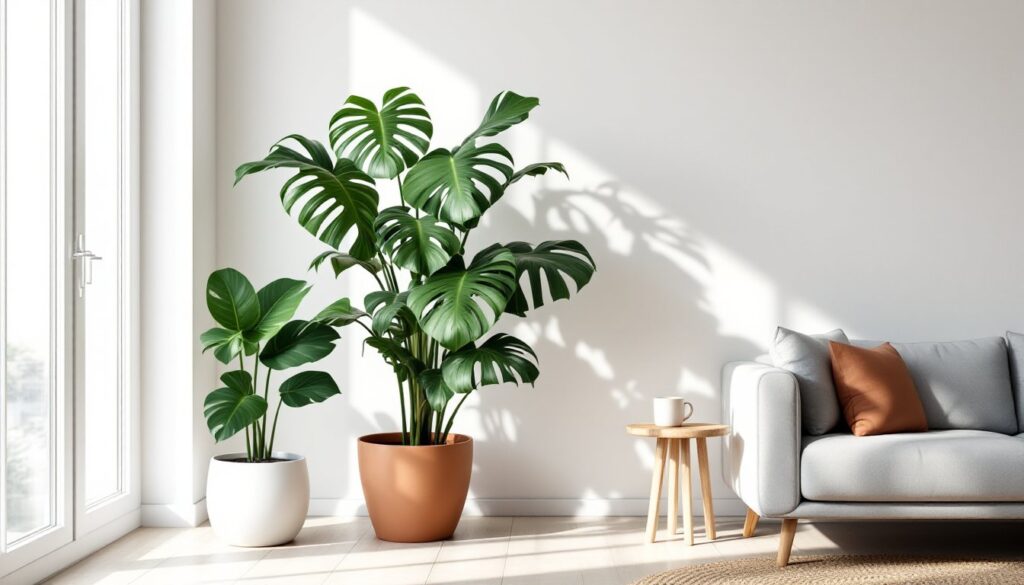
The Monstera deliciosa earns its popularity through sheer adaptability and visual drama. Those signature fenestrations, splits and holes in mature leaves, develop naturally as the plant matures, typically appearing when leaves exceed 8–10 inches in diameter. Younger plants produce solid leaves: patience is required.
Light needs are forgiving. Monsteras tolerate bright indirect light but also survive in moderate shade, though growth slows and fenestrations may not develop fully. East-facing windows work best: southern exposures risk leaf burn unless filtered through sheer curtains.
Support is non-negotiable for mature specimens. In nature, Monsteras climb trees using aerial roots. Indoors, provide a moss pole or wooden stake to encourage upward growth and larger leaves. Without support, plants sprawl horizontally and leaves stay smaller.
Watering follows the classic “dry down” method: allow the top 2–3 inches of soil to dry between waterings. Overwatering causes yellowing leaves and root rot: underwatering leads to crispy brown edges. In winter, reduce frequency as growth slows.
Pruning keeps size manageable. Use clean bypass pruners to remove leggy growth or damaged leaves at the stem base. Cuttings propagate easily in water, a bonus for DIYers who want multiple plants or gifts for friends.
Fiddle Leaf Fig: A Designer Favorite for Light-Filled Rooms
The fiddle leaf fig (Ficus lyrata) demands more than it gives initially, but few plants deliver comparable elegance. Those massive, violin-shaped leaves can span 12–18 inches, creating instant drama in corners or flanking entryways.
Light is critical. Fiddle leaf figs need 6+ hours of bright, indirect light daily. South or west-facing windows work if the plant sits 3–5 feet back from the glass. Insufficient light causes leggy growth, leaf drop, and weak stems. For dimmer rooms, consider supplemental grow lights with full-spectrum LEDs.
Watering demands consistency. The soil should dry out about 50% between waterings, stick your finger in to the second knuckle to gauge moisture. Fiddle leaf figs hate both drought and soggy roots. Use pots with drainage holes and a well-draining mix (2 parts potting soil, 1 part perlite).
Dust accumulation on those broad leaves blocks light absorption. Wipe leaves monthly with a damp microfiber cloth, no leaf shine products, which clog pores and attract more dust.
Stability matters. Once positioned, leave the plant alone. Fiddle leaf figs stress easily when moved, responding with leaf drop. Choose the permanent spot carefully, factoring in light, foot traffic, and visual balance.
Bird of Paradise: Tropical Drama Indoors
Bird of paradise (Strelitzia reginae or Strelitzia nicolai) brings bold, paddle-shaped leaves that mimic banana plants. The reginae variety stays more compact (4–6 feet indoors), while nicolai can push 8–10 feet if given space and light.
These plants crave brightness. Position them in the sunniest spot available, ideally a south-facing window with several hours of direct sun. They’ll survive in moderate light but won’t thrive or bloom. Indoor flowering is rare but possible with enough light and maturity (plants typically need 5+ years and ideal conditions).
Watering needs are moderate to high during the growing season (spring through early fall). The soil should stay lightly moist but never waterlogged. In winter, cut back to allow partial drying between waterings. Use pots at least 14–18 inches in diameter for stability: top-heavy plants in small pots tip easily.
Leaves split naturally along the veins, this isn’t damage but an evolutionary adaptation to withstand wind. Don’t attempt to repair splits: they’re normal.
Space planning is essential. Bird of paradise leaves spread wide: allow a 3–4 foot diameter footprint for mature specimens. They work well in corners or as room dividers but will overwhelm small spaces. Brown leaf edges usually indicate low humidity or underwatering, both common in heated homes during winter.
Essential Care Tips for Thriving Large Leaf Plants
Watering consistency beats watering frequency. Most large leaf plant failures stem from erratic moisture, alternating between bone-dry and swampy conditions stresses roots and invites disease. Establish a checking routine rather than a calendar schedule: environmental factors (humidity, temperature, season) affect water needs more than the day of the week.
Drainage is mandatory. Use pots with drainage holes and elevate them on pot feet or saucers with pebbles to prevent roots from sitting in runoff. If you’re committed to a decorative cache pot without drainage, use it as a sleeve: water the plant in a sink, let it drain completely, then return it to the decorative pot.
Soil composition matters for large specimens. Standard potting mix works initially, but mature plants in 12-inch or larger pots benefit from custom blends that balance moisture retention with aeration. A reliable mix: 40% peat or coir, 30% pine bark fines, 20% perlite, 10% compost. This drains faster than bag mixes while supporting the nutrient needs of big plants.
Fertilization during the growing season (April through September) keeps foliage lush. Use a balanced, water-soluble fertilizer (10-10-10 or 20-20-20) at half the recommended strength every 3–4 weeks. Overfertilizing causes salt buildup and leaf burn: flush the soil with plain water every 2–3 months to leach excess salts.
Humidity helps but isn’t always critical. Most large leaf tropicals appreciate 50–60% relative humidity, achievable with grouping plants together or using a humidifier during dry months. Misting provides minimal benefit and can encourage fungal issues: if humidity is genuinely low (below 30%), invest in a cool-mist humidifier rather than relying on spray bottles.
Repotting becomes necessary when roots circle the pot bottom or push through drainage holes. Spring is ideal timing. Size up only 2 inches in diameter per repot: oversized pots hold excess moisture that roots can’t absorb, increasing rot risk. For very large plants in 16+ inch pots, top-dressing (replacing the top 2–3 inches of soil annually) may be more practical than full repotting.
Pest monitoring should be routine. Check leaf undersides and stem joints monthly for spider mites, scale, and mealybugs. Early detection makes treatment easier, spray affected areas with insecticidal soap or neem oil per label directions. Isolate infested plants immediately to prevent spread. Wearing gloves when handling treatments and working in ventilated areas are basic safety measures.
For common care issues and recovery techniques, symptoms often telegraph the problem: yellowing lower leaves suggest overwatering, brown crispy edges indicate underwatering or low humidity, and pale new growth points to insufficient light or nutrients.
How to Style Large Leaf Plants in Different Rooms
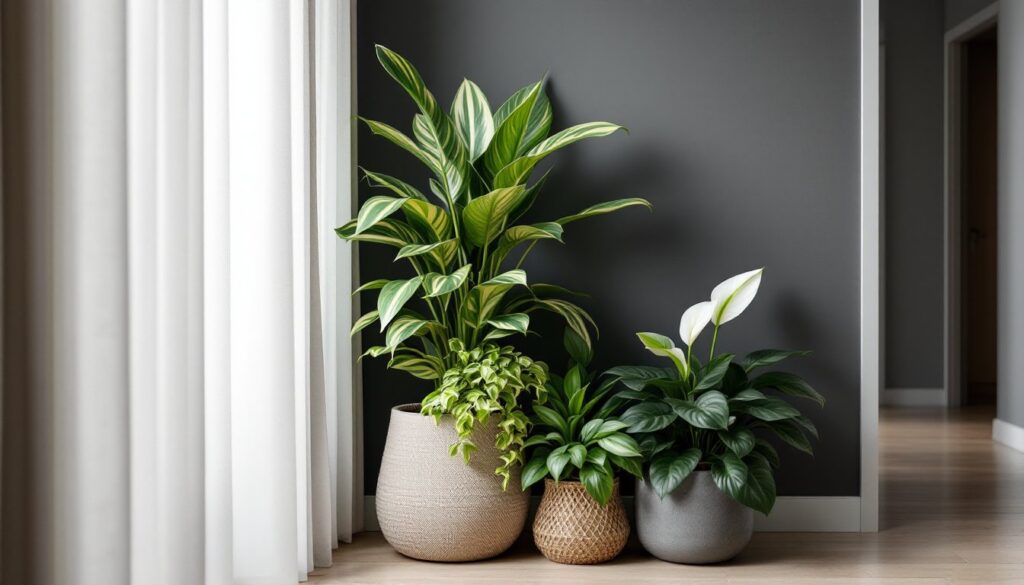
Living rooms benefit from corner placements that fill vertical space without blocking sightlines. Position a Monstera or fiddle leaf fig adjacent to a sofa or reading chair, angled slightly toward the room center. This creates layering and depth without obstructing conversation areas. Pair large plants with low-profile furniture to maintain proportion: a towering plant beside a low-slung mid-century sofa creates intentional contrast.
Floor protection is practical, not optional. Use cork mats, jute trivets, or rubber pot feet under large planters to prevent moisture damage on hardwood or tile. For carpeted areas, place a waterproof saucer beneath decorative cache pots, water stains on carpet are difficult to remove and may promote mold growth.
Dining spaces accommodate large leaf plants when positioned away from the table itself. A bird of paradise beside a sideboard or hutch adds height and frames the dining area without crowding diners. Ensure leaves don’t overhang seating areas: brushing against foliage during meals is awkward, and leaves can tear from repeated contact.
Bedrooms suit slightly smaller varieties or specimens pruned to stay under 5 feet. Position plants where they won’t be bumped during nighttime navigation. East-facing bedroom windows pair well with light-loving houseplants that appreciate morning sun without afternoon intensity.
Entryways make strong first impressions when anchored by a statement plant. Choose hardy varieties like Monstera or ZZ plant (if you prefer large leaflets over single leaves) that tolerate temperature fluctuations from opening doors. Ensure adequate clearance, 18 inches minimum, between the plant and the door swing to prevent leaf damage.
Bathrooms with windows can support large leaf tropicals that love humidity, such as Monstera or philodendron varieties. But, most bathrooms lack the floor space and light intensity these plants need to truly thrive. If your bathroom has a skylight or large window and at least 20 square feet of open floor space, it’s worth trying: otherwise, stick with smaller humidity-lovers like ferns.
Scale balancing prevents a single plant from overwhelming a room. In spaces under 150 square feet, limit yourself to one large floor plant or pair it with much smaller specimens on shelves or tables. Larger rooms (200+ square feet) can handle multiple large plants if spaced around the perimeter rather than clustered.
Pot selection impacts both aesthetics and function. Terracotta breathes well and suits overwater-prone plant parents but dries out faster. Ceramic with drainage holes offers middle ground. Plastic nursery pots inside decorative cache pots provide flexibility, swap out the decorative pot seasonally while keeping the plant’s root environment stable. Ensure any pot is proportional: the container height should be roughly one-third the plant’s total height for visual balance.
For rooms with challenging light conditions, large leaf plants may struggle. In those scenarios, consider alternatives with smaller foliage but similar structural presence, or invest in quality grow lights to supplement natural light. Attempting to force a light-dependent large leaf plant into a dim corner results in leggy growth, leaf drop, and frustration.