
Table of Contents
ToggleFake plants have come a long way from the dusty plastic ferns of the ’90s. Today’s artificial greenery is convincing enough to fool even seasoned gardeners at a glance, and it won’t die if you forget to water it for three months straight. Whether you’re dealing with a windowless bathroom, a demanding work schedule, or pets that treat every real plant like a salad bar, high-quality faux plants offer a practical solution that doesn’t sacrifice style. This guide walks through how to pick convincing artificial plants, where to use them, and how to style them so they look intentional rather than like an afterthought from a clearance bin.
Key Takeaways
- Indoor fake plants are a practical, low-maintenance solution for spaces with poor lighting, busy schedules, or curious pets, requiring no water, sunlight, or special care.
- High-quality artificial plants feature color variation, realistic textures, bendable wire stems, and authentic construction details that distinguish them from obviously plastic alternatives.
- Silk and polyester plants offer the most convincing appearance for statement pieces, while plastic options excel in high-humidity areas like bathrooms, and preserved plants provide truly real but maintenance-free greenery.
- Styling artificial plants naturally requires pairing them with real planters and natural materials, adjusting stems for asymmetry, grouping in odd numbers, and positioning them where real plants would logically thrive.
- Regular dusting with microfiber cloths, deep cleaning every few months, protection from direct sunlight, and seasonal styling adjustments keep fake plants looking vibrant and intentional.
- Mixing indoor fake plants with one or two low-maintenance living plants and natural materials prevents spaces from feeling sterile while maintaining the practical benefits of artificial greenery.
Why Indoor Fake Plants Are a Smart Choice for Modern Homes
Real plants demand light, water, humidity, and patience. Fake plants demand none of that. For rooms with poor natural light, think interior bathrooms, basements, or north-facing offices, artificial greenery provides visual interest without requiring grow lights for house plants or complex care routines.
They’re also a practical choice for renters who move frequently, busy households where watering schedules fall apart, and homes with curious pets or young children. No worrying about toxic leaves or soil spills. And unlike real plants that can trigger allergies or attract pests like fungus gnats, quality faux plants stay clean and static.
From a design standpoint, artificial plants let you use species that wouldn’t survive your actual conditions. Want a fiddle-leaf fig in a dim corner? A monstera in a humid bathroom? Fake plants ignore hardiness zones and light requirements entirely. They’re also cost-effective over time, no replacements, no soil, no fertilizer.
How to Choose High-Quality Artificial Plants That Look Real
Not all fake plants are created equal. The difference between convincing greenery and obvious plastic comes down to materials, construction, and attention to detail.
Look for plants with variation in color. Real foliage isn’t uniform, leaves have gradients, veining, minor discoloration, and natural imperfections. High-quality fakes replicate this with multiple shades of green, brown edges, or subtle yellowing on older leaves. If every leaf is the same flat green, it’ll read as artificial from across the room.
Check for realistic textures. Run your hand over the leaves. Quality silk or polyester plants have texture variation, matte finishes on some areas, slight sheen on others, tactile veining. Cheaper plastic plants feel slick and uniform. Some premium options even include flocking (a fuzzy coating) to mimic the natural texture of certain species like succulents or dusty miller.
Inspect the stem and trunk construction. Bendable wire stems wrapped in natural-looking material (like paper-wrapped wire or foam-coated wire) allow you to adjust and shape the plant for a more organic silhouette. Rigid plastic stems look stiff and unnatural. For trees, look for trunks made from real wood or convincing molded resin with bark texture, not smooth plastic tubes.
Material Quality and Construction
Silk plants are a misnomer, most are actually polyester, but the term stuck. These offer the most realistic appearance, with fabric leaves that can be shaped and styled. They’re ideal for statement pieces like fiddle-leaf figs, monsteras, or olive trees.
Plastic plants range from budget-friendly to surprisingly convincing. High-end plastic uses multiple molds and hand-painted details to create depth. Budget plastic is obvious and best avoided for visible spaces. Plastic holds up better in high-humidity areas like bathrooms compared to fabric options.
Preserved or stabilized plants are real plants treated with glycerin to halt decay. They’re technically not artificial, but they’re maintenance-free. Moss walls and eucalyptus arrangements often use this method. They look incredibly real because they are real, just frozen in time. The downside: they’re fragile and can’t handle moisture or direct sunlight.
Avoid plants with visible glue seams, uniform leaf placement (real plants grow asymmetrically), or bases that look like green foam blocks. Quality faux plants come potted in real soil or decorative moss, not Styrofoam.
Best Types of Indoor Fake Plants for Different Rooms
Matching the right artificial plant to the room makes the difference between a well-thought-out space and a random decoration.
Living rooms can handle larger statement pieces: fiddle-leaf figs, bird of paradise, monstera, or olive trees. These anchor a corner, flank a sofa, or fill an empty nook. Go for plants in the 5-7 foot range in substantial planters (ceramic, concrete, or woven baskets).
Bathrooms benefit from moisture-loving species, even if your fake version doesn’t care about humidity, the visual logic matters. Ferns, pothos, eucalyptus, and snake plants make sense in a bathroom. Small potted succulents work on a vanity, and hanging pothos or string of pearls add dimension without taking up counter space.
Kitchens pair well with herb arrangements (faux basil, rosemary, or thyme in small pots on a windowsill) or trailing greenery on open shelving. Keep plants away from direct heat sources, prolonged exposure to stovetop heat can warp plastic or fabric.
Bedrooms suit calming, softer plants: trailing pothos, philodendron, or small palms. Avoid anything too large or visually busy if you prefer a restful space. Bedside tables or dressers work well for smaller potted varieties.
Home offices benefit from desk-friendly options: small succulents, snake plants, or compact ZZ plants. For spaces with zero natural light, consider species that naturally tolerate low light in real life for visual consistency, like house plants that don’t need sunlight.
Entryways and hallways can use vertical plants or wall-mounted planters. Hanging ferns or ivy add life to narrow spaces without cluttering walkways.
Styling Tips: Making Artificial Plants Look Natural and Intentional
Even the most realistic fake plant can look cheap if styled poorly. The goal is to integrate artificial greenery as if it belongs, not like it was placed as an afterthought.
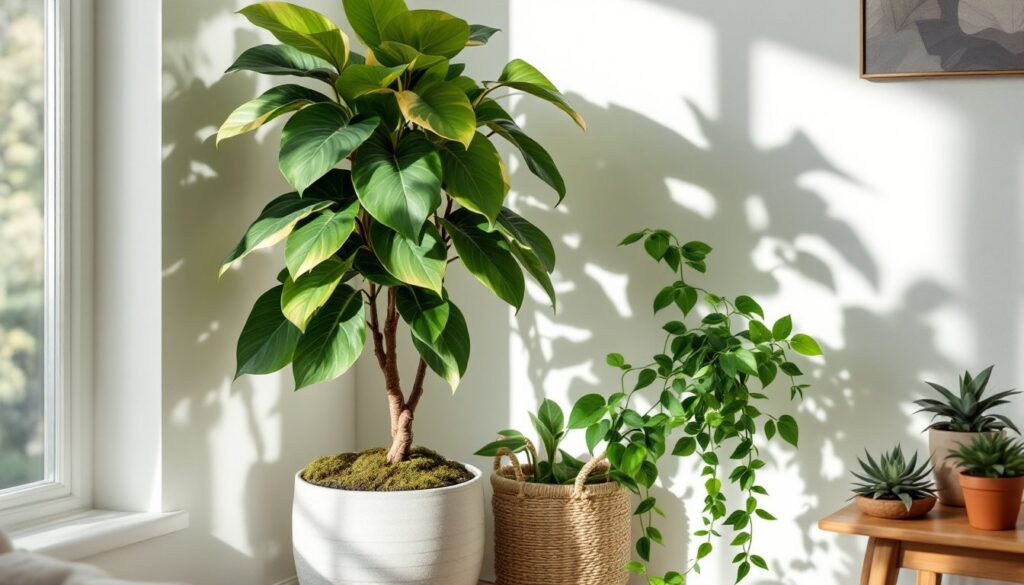
Layer with real elements. Pair fake plants with real containers, natural materials like wood or stone, and actual soil or moss on top of the base. Swap out the plastic nursery pot for a ceramic planter or woven basket. Top the soil with real moss, pebbles, or bark mulch. This grounds the plant and adds textural authenticity.
Adjust and shape the stems. Most quality faux plants arrive with adjustable stems. Bend and fluff leaves to create asymmetry. Real plants don’t grow in perfect symmetry, some leaves angle down, others twist slightly, and stems lean in different directions. Spend a few minutes shaping your plant after unboxing.
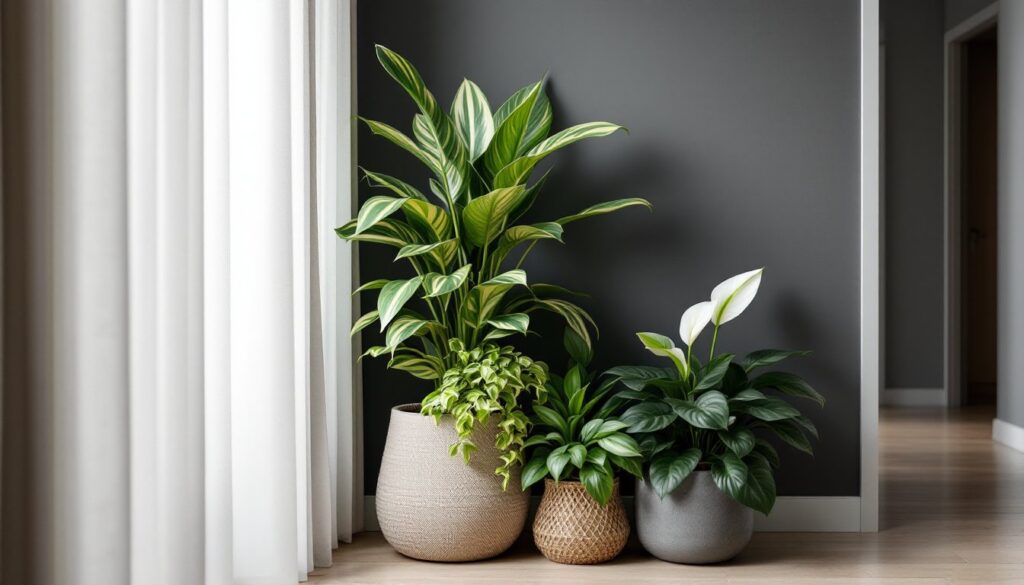
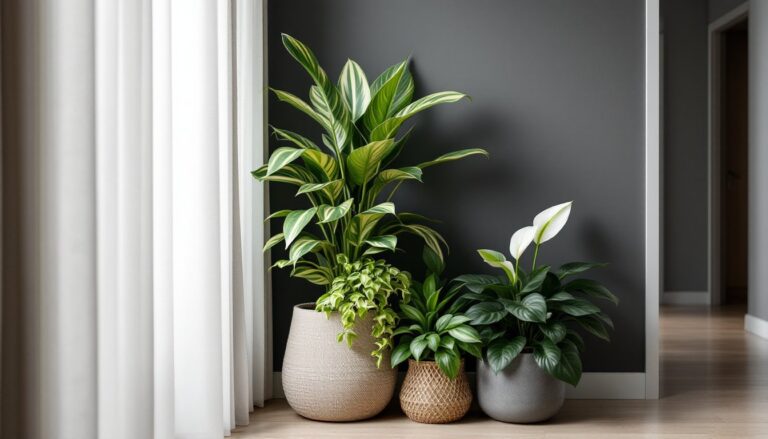
Group plants in odd numbers. Interior design principles from modern decor spaces suggest clustering plants in groups of three or five creates a more organic, curated look than a single plant alone. Vary heights and textures, pair a tall fiddle-leaf fig with a trailing pothos and a compact succulent cluster.
Use varied planter styles. Mixing planter materials (ceramic, terracotta, woven baskets, concrete) keeps the eye moving and prevents a matchy-matchy look. If you’re using multiple plants, choose planters in a consistent color palette but different textures.
Don’t overdo it. A room filled with only fake plants can feel sterile or obviously artificial. If possible, mix in one or two real plants that are genuinely low-maintenance (like pothos or snake plants) to add living texture. If that’s not an option, balance artificial greenery with natural materials, wood furniture, linen textiles, stone accents.
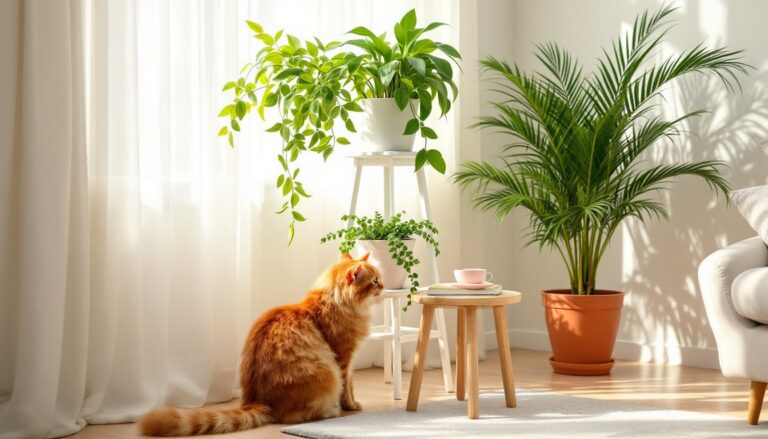
Place plants where real ones would thrive. Avoid putting a faux fiddle-leaf fig in a dark corner where a real one would die, it signals fakeness. Position plants near windows, on shelves with ambient light, or in spots that feel logical. This doesn’t mean you can’t use a fake plant in a dark bathroom, but choose species like ferns or pothos that would realistically tolerate low light.
Add height variation. Use plant stands, stack books, or place plants on furniture at different levels. Flat, uniform heights look staged. Real homes have plants on the floor, on shelves, hanging from ceilings, and perched on side tables.
Caring for and Maintaining Your Faux Greenery
Fake plants don’t need water, but they do need cleaning. Dust buildup is the fastest way to make artificial greenery look cheap and neglected.
Dust regularly. Use a microfiber cloth, a soft paintbrush, or a handheld duster weekly. For silk or fabric plants, a quick pass with a feather duster works. For plastic plants, wipe down leaves with a damp cloth. Dusty plants look gray and lifeless, clean ones catch light and look vibrant.
Deep clean every few months. For small potted plants, take them outside and rinse with a garden hose or in the shower with lukewarm water. Let them air-dry completely before bringing them back inside. For larger plants, use a damp cloth with a drop of mild dish soap, then wipe clean with plain water. Avoid harsh chemicals that can fade colors or damage finishes.
Protect from direct sunlight. Prolonged UV exposure fades colors, especially on fabric plants. If a plant sits in a sunny window, expect it to bleach over time. Rotate it occasionally or choose a spot with indirect light.
Check for wear. Over time, leaves may crease, stems may loosen, or colors may fade. Replace heavily worn plants rather than letting tired-looking greenery drag down a room’s aesthetic. Quality faux plants can last years with proper care, but they’re not immortal.
Refresh styling seasonally. Adjust stems, swap out planters, or move plants to different rooms to keep your space feeling current. Faux plants are easy to relocate, use that flexibility. Combining faux options with inspiration from home design ideas keeps your interiors feeling intentional and polished.
Conclusion
High-quality artificial plants offer a practical, low-maintenance way to bring greenery into spaces where real plants struggle. Choose materials and construction carefully, style with intention, and maintain them like any other part of your home. Done right, faux plants add warmth and life without the upkeep, and nobody has to know they’re fake unless you tell them.