
Table of Contents
ToggleMost homes hover around 30–40% relative humidity during winter months, fine for humans, tough on tropical plants. If you’ve noticed brown leaf tips, slow growth, or pest problems on your fiddle-leaf fig or calathea, dry air is often the culprit. Adding a humidifier specifically for your indoor plants isn’t just about aesthetics: it’s about replicating the moisture-rich environments these plants evolved in. This guide walks through why humidity matters, how to pick the right unit, where to position it, and how to keep both the machine and your plants in top shape.
Key Takeaways
- A humidifier for plants indoor is essential for tropical houseplants, which evolved in rainforests and struggle in homes with winter humidity levels of 20–30%.
- Low humidity causes brown leaf tips, slowed growth, and pest infestations, while proper humidity between 50–70% promotes healthy transpiration and pest resistance.
- Ultrasonic and evaporative humidifiers with 1–2 gallon tanks offer the best balance of noise, cost, and coverage for most plant collections.
- Position your humidifier elevated 2–3 feet high in the center of your plant grouping, at least 12 inches away from walls and wood furniture, with the nozzle angled near—not directly at—leaves.
- Commit to weekly cleaning with vinegar solution and use distilled water to prevent mineral buildup and bacterial growth that could harm your plants.
- Monitor humidity levels with a hygrometer aiming for 50–70% depending on plant species, and adjust runtime seasonally based on plant appearance and environmental conditions.
Why Your Indoor Plants Need a Humidifier
Indoor plants, especially tropicals like ferns, orchids, and aroids, originated in rainforests where humidity routinely exceeds 60%. Central heating and air conditioning strip moisture from the air, leaving many homes at 20–30% humidity in winter. That’s drier than most deserts.
Low humidity stresses plants in several ways. Leaf tips and margins turn brown and crispy as water evaporates faster than roots can replace it. Stomata (tiny pores on leaves) close to conserve moisture, slowing photosynthesis and growth. Spider mites and thrips thrive in dry conditions, multiplying faster on stressed plants. You’ll also see more leaf drop, slower unfurling of new growth, and pale or stunted foliage.
A humidifier raises ambient moisture levels, letting plants transpire normally and keeping pest populations in check. It’s not a luxury for serious common indoor house plants, it’s infrastructure. Think of it like proper lighting or well-draining soil: a baseline requirement for plants adapted to humid climates.
Safety note: Keep electrical cords and humidifier bases away from pooling water to prevent shock hazards. Use a GFCI-protected outlet if running a humidifier near watering stations.
How to Choose the Right Humidifier for Your Indoor Plants
Types of Humidifiers Best Suited for Plant Care
Four main types dominate the market, each with trade-offs for plant care.
Evaporative humidifiers use a fan to blow air through a wet wick or filter. They’re self-regulating, output drops as humidity rises, and generally affordable. Downside: filters need replacing every 1–2 months, and mineral buildup can clog wicks if you’re using hard water. Good for medium-sized plant groupings (10–15 plants in a 150–200 sq ft room).
Ultrasonic humidifiers vibrate water into a fine mist using a metal diaphragm. They’re whisper-quiet and energy-efficient, but they can leave a white dust (mineral residue) on leaves and furniture unless you use distilled water. Best for smaller collections or single-plant setups like a humidity tent around a sensitive calathea.
Steam vaporizers boil water and release warm steam. They kill bacteria and mold in the water, making them sanitary, but they consume more electricity and pose a burn risk near curious pets or kids. Not ideal for plant-only use unless you’re also treating a sick plant that benefits from warmth.
Impeller humidifiers fling water through a rotating disk, creating a cool mist. Less common for home use, but effective. Similar pros and cons to ultrasonic units.
For most plant owners, an ultrasonic or evaporative humidifier with a 1–2 gallon tank offers the best balance of runtime, noise, and cost.
Key Features to Look for in a Plant Humidifier
Tank capacity determines how often you’ll refill. A 1-gallon tank runs about 12–16 hours on low: a 2-gallon can go 24+ hours. For a serious plant collection, look for 2 gallons minimum. Refilling daily gets old fast.
Adjustable mist output lets you fine-tune humidity. A dial or digital control that goes from low to high is essential, you don’t want full-blast mist condensing on walls or furniture. Many home improvement enthusiasts suggest starting on low and monitoring with a hygrometer.
Built-in humidistat (automatic shutoff at target humidity) prevents over-humidification, which invites mold and fungal issues. Not all models include this, but it’s worth the extra cost if you’re running the unit 24/7.
Directional nozzle or 360° mist matters for coverage. A swiveling nozzle lets you aim mist toward plant clusters: omnidirectional mist works better for large rooms with plants on multiple shelves.
Filter or filterless design: Evaporative units need replacement filters: ultrasonic units often don’t, but require more frequent cleaning to prevent biofilm and mineral scale.
Noise level: Ultrasonic models run nearly silent (under 30 dB): evaporative units hum from the fan (35–45 dB). If your plants share space with a bedroom or office, noise matters.
Avoid gimmicks like “aromatherapy trays” or essential oil compatibility, those oils can damage plant leaves and gum up the humidifier’s internals.
Where to Place Your Humidifier for Maximum Plant Benefits
Placement makes or breaks a humidifier’s effectiveness. Mist doesn’t travel as far as you’d think, most droplets settle within 3–5 feet of the nozzle.
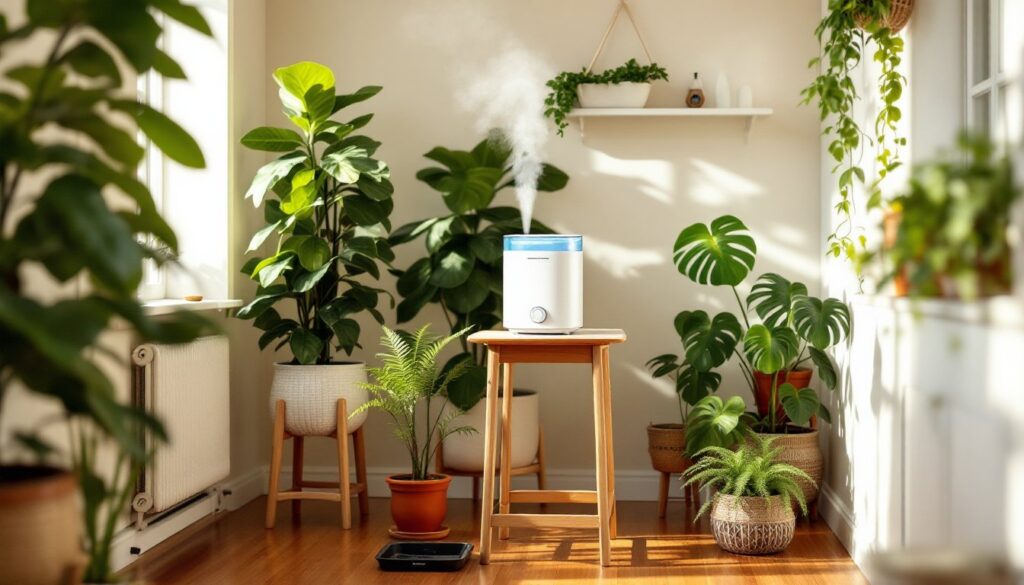
Elevate the unit on a plant stand, overturned crate, or shelf so the mist disperses at mid-canopy height rather than pooling on the floor. Aim for 2–3 feet off the ground. This also keeps the base dry and prevents water damage to flooring.
Center it among your plant grouping. If you have plants clustered on a shelving unit or in a corner, position the humidifier in the middle so all plants benefit equally. Don’t tuck it behind large specimens, airflow needs to circulate.
Keep it away from walls and wood furniture. Constant mist on drywall, wallpaper, or wood finishes causes peeling, warping, and mold. Maintain at least 12 inches of clearance from vertical surfaces.
Avoid direct mist on leaves. While plants love humidity, a constant stream of mist on foliage promotes fungal diseases like powdery mildew or botrytis. Aim the nozzle near plants, not at them. Some growers point the mist upward so it falls gently like rain.
Don’t place it near heat vents or drafty windows. Forced air from HVAC ducts will blow mist away from plants and make the humidifier work harder. Cold drafts near windows can cause condensation and temperature swings that stress plants.
Use a waterproof tray or mat under the humidifier to catch drips and overspray. A simple boot tray or plant saucer works. This also makes it easier to move the unit for cleaning.
If you’re using grow lights for supplemental lighting, place the humidifier so mist doesn’t condense on hot bulbs or LED fixtures, water and electricity don’t mix, and mineral residue can reduce light output.
Maintaining Your Humidifier and Monitoring Plant Humidity Levels
A dirty humidifier is worse than no humidifier, it’ll spray bacteria, mold spores, and mineral dust all over your plants.
Daily: Empty any leftover water and refill with fresh water. Stagnant water grows biofilm (that slimy layer) within 24 hours.
Weekly: Disassemble the tank and base. Scrub all surfaces with a 1:10 solution of white vinegar and water or a few drops of unscented dish soap. Use a bottle brush to reach inside the tank and around the mist nozzle. Rinse thoroughly, soap or vinegar residue can harm plants if aerosolized. Let parts air-dry completely before reassembling.
Monthly: If you have hard water, soak components in undiluted white vinegar for 20–30 minutes to dissolve mineral scale. Some models have demineralization cartridges that need replacing every 30–60 days, don’t skip this or you’ll coat everything in white dust.
Replace filters (evaporative models) every 1–3 months, depending on runtime and water quality. A clogged filter reduces output and harbors mold.
Use distilled or filtered water whenever possible. Tap water contains minerals (calcium, magnesium) that leave deposits inside the machine and on plant leaves. Distilled water costs about $1/gallon at most grocery stores, worth it for longevity and cleanliness. If you must use tap water, at least let it sit overnight so chlorine evaporates.
Monitor humidity with a hygrometer. These cost $10–15 and provide real-time readings. Most tropical houseplants thrive at 50–60% humidity: ferns and orchids prefer 60–70%. Place the hygrometer at plant height, not on a high shelf where readings skew higher. According to experts at Good Housekeeping, digital hygrometers with min/max memory help track fluctuations over 24 hours.
Adjust runtime seasonally. In winter, you might run the humidifier constantly. In humid summer months, you may only need it during air conditioning cycles. Watch your plants, wilting, crispy edges, or spider mite webbing signal the need for more humidity.
PPE reminder: When cleaning with vinegar or disinfectants, wear nitrile gloves to protect skin, and work in a ventilated area to avoid inhaling fumes.
Conclusion
A humidifier isn’t a magic fix for every plant problem, but for humidity-loving species, it’s as essential as proper plant identification and watering schedules. Choose a model sized for your space, place it strategically, and commit to weekly cleaning. Monitor levels with a hygrometer, adjust output as seasons change, and your plants will reward you with lush growth and fewer pest headaches.