
Table of Contents
ToggleHouse plants can be the perfect companions, adding a splash of green to any space. But what happens when natural sunlight plays hide and seek? Enter grow lights—the superheroes of the indoor gardening world. These magical devices not only save plants from the gloom but also turn your home into a botanical paradise.
Overview of Grow Lights for House Plants
Grow lights serve as artificial light sources designed specifically for plant growth. They compensate for insufficient natural light, especially during winter months or in low-light homes. Various types of grow lights exist, including LED, fluorescent, and incandescent options. Each type offers distinct advantages, allowing users to select based on their specific plant needs.
LED grow lights emit less heat, making them energy efficient and ideal for close placement to plants. Fluorescent lights provide a spectrum suitable for seedlings and leafy greens. Incandescent grow lights produce a lot of heat, which can negatively impact some plants but may benefit others requiring warmth.
Plants respond differently to light intensity and duration. Most house plants thrive under 14 to 16 hours of light daily, with a dark period of 8 to 10 hours. Adjusting the light schedule promotes healthier growth and flowering in some species.
Light spectrum plays a crucial role in plant development. Grow lights typically offer full-spectrum light, which mimics natural sunlight. Red light encourages flowering, while blue light supports leafy growth. Understanding these aspects aids in selecting the right light for various plant types.
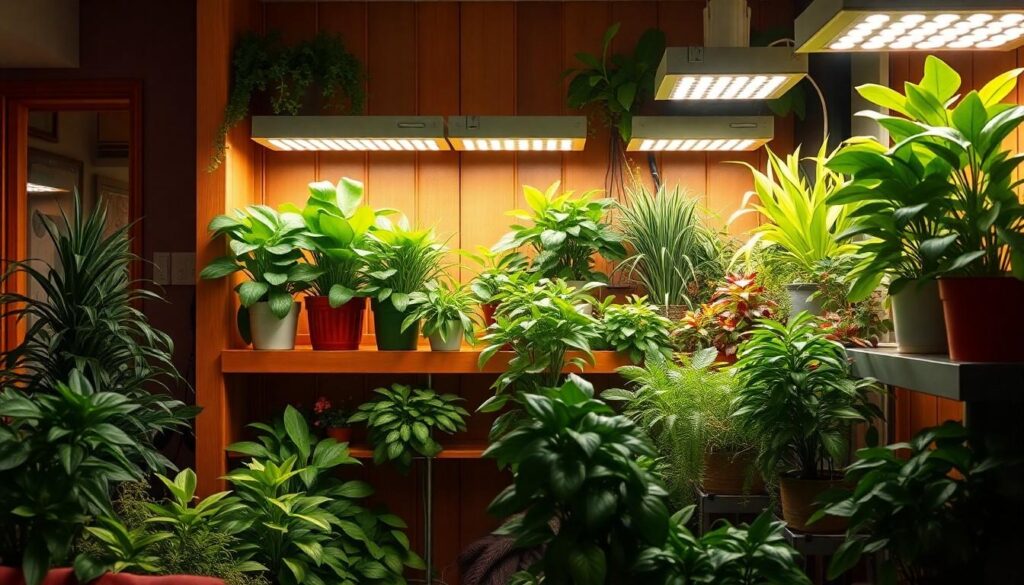
Placement of grow lights impacts their effectiveness. Positioning lights approximately 12 to 24 inches above plants ensures adequate light distribution. Additionally, moving lights closer or farther away may assist in optimizing growth based on plant response.
Using grow lights continues to grow in popularity among indoor gardeners. They enhance plant health and vibrancy, transforming living spaces. Adopting grow lights offers a practical solution for maintaining lush indoor gardens, regardless of natural light availability.
Types of Grow Lights
Various grow light types cater to different plant needs. Each type has unique features and benefits.
LED Grow Lights
LED grow lights offer energy efficiency and longevity. They produce minimal heat, making them safe for close placement to plants. Users appreciate the full spectrum options that mimic natural sunlight, promoting optimal growth. Different wattage levels accommodate a range of plant species. Almost all house plants respond well to this type of lighting, thriving with 14 to 16 hours of light daily.
Fluorescent Grow Lights
Fluorescent grow lights excel for seedlings and leafy greens. These lights are low-cost and generate less heat, reducing the risk of burning plants. Their compact size fits well in small spaces, providing adequate illumination for various indoor gardens. Color temperature options, typically in cool white or daylight varieties, enhance growth. Many gardeners find it beneficial to use these lights for extended periods without compromising plant health.
Incandescent Grow Lights
Incandescent grow lights generate significant heat, which can be both advantageous and problematic. They provide a warm glow that supports certain plant species, especially those that thrive in hotter conditions. This type of lighting has a shorter lifespan compared to LEDs and fluorescents, leading to higher replacement costs. While useful as supplemental lighting, they consume more energy, making them less ideal for primary use. A smart placement helps balance the heat output and light requirement for optimal plant growth.
Benefits of Using Grow Lights
Grow lights offer significant advantages for house plant enthusiasts. These artificial light sources play a crucial role in supporting plant health in low-light environments.
Enhanced Plant Growth
Enhanced plant growth occurs when grow lights simulate natural sunlight. Providing the right spectrum of light encourages photosynthesis, which drives energy production in plants. Many house plants thrive under full-spectrum LED lights, as they closely replicate sunlight. Optimal light duration of 14 to 16 hours promotes robust growth, enabling plants to achieve their full potential. Regular use of grow lights can result in healthier leaves, stronger stems, and vigorous flowering. Consistency in light provision fosters a thriving indoor garden, ensuring plants develop properly and remain vibrant.
Year-Round Gardening
Year-round gardening becomes achievable with the use of grow lights. Grow lights eliminate the limitations imposed by seasonal changes and varying daylight hours. Plants flourish indoors regardless of outdoor weather conditions. For instance, during winter months, supplemental lighting extends the growing season, allowing gardeners to continue cultivating herbs, vegetables, and flowers. Indoor gardeners can create a controlled environment that meets specific plant requirements. Stability in light conditions leads to predictable growth patterns, allowing for planning and harvesting throughout the year. The versatility of grow lights supports indoor gardening ambitions across all seasons.
Selecting the Right Grow Light
Choosing the right grow light involves several key factors that can enhance plant growth effectively.
Light Spectrum Considerations
Grow lights emit light in specific spectrums crucial for photosynthesis. Blue light supports vegetative growth, making plants sturdy and lush. Red light promotes flowering and fruiting, crucial for producing blooms and edible yield. Full spectrum grow lights offer a balanced light spectrum, mimicking natural sunlight and benefiting various plant types. Using multiple light spectrums can cater to diverse plant requirements, fostering robust growth and health. Personalizing light selections based on plant types can enhance overall indoor gardening success.
Wattage and Coverage Area
Wattage impacts energy consumption and light output for plants. Higher wattage typically means more intense light, beneficial for larger areas or plants needing extra light. Determining the coverage area ensures effective light distribution, preventing shadows and dark spots. It’s common to position lights approximately 12 to 24 inches above the plants, optimizing light reach. Smaller plants may require lower wattage, while larger varieties thrive under more intense illumination. Matching wattage with the coverage area creates an efficient setup that maximizes plant health and growth potential.
Setting Up Grow Lights for Optimal Performance
Select the appropriate type of grow light based on plant needs and space availability. LED grow lights provide versatility and efficiency, accommodating a range of house plants with their full spectrum features. Fluorescent grow lights excel for seedlings or leafy greens, generating less heat and minimizing energy consumption. Incandescent options serve as useful supplemental lights but may not support primary growth efficiently due to higher energy costs and heat output.
Determine the right distance for placement above plants, generally between 12 to 24 inches. Maintain this distance to prevent leaf burn while ensuring adequate light intensity. Adjusting the height can also cater to specific plant requirements as they grow taller. Positioning lights directly above plants fosters even light distribution, promoting consistent growth.
Monitor the light duration, aiming for 14 to 16 hours daily for optimal growth. This setup mimics natural sunlight and encourages photosynthesis effectively. Consider using timers to automate light schedules, ensuring plants receive consistent exposure without manual intervention.
Evaluate the coverage area needed to efficiently illuminate all plants. Higher wattage lights cover larger spaces, making them ideal for extensive indoor gardens. Mixing different types of lights can meet diverse plant needs across varying growth stages.
Lastly, always pay attention to light spectrum needs. Blue light actively supports vegetative growth while red light drives flowering and fruiting processes. Using full spectrum lights encompasses both blue and red wavelengths, facilitating thriving growth for multiple plant types. Proper arrangements based on these guidelines lead to vibrant, robust indoor plants.
Grow lights are a game-changer for house plant enthusiasts looking to create a thriving indoor garden. By providing essential light when natural sunlight falls short, these lights enable plants to flourish year-round. The variety of options available—from energy-efficient LEDs to cost-effective fluorescents—ensures that every plant type can receive the light it needs to thrive.
With the right setup and careful consideration of light spectrum and placement, indoor gardeners can enjoy healthier plants and more vibrant growth. Embracing grow lights not only enhances the beauty of indoor spaces but also supports a more predictable and successful gardening experience. It’s time to illuminate those indoor gardens and watch them thrive.